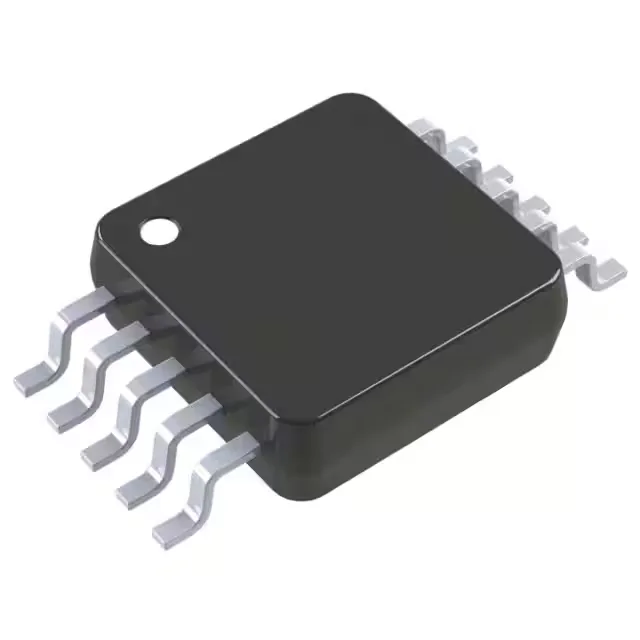
Analog Devices AD5322ARMZ — Analog & Data Acquisition

AD5322ARMZ 12-bit dual DAC, 10-MSOP, SPI, Analog Devices

MPNAD5322ARMZ
End of Life

Analog Devices AD5322ARMZ, 12-bit dual DAC, Voltage - Buffered output, SPI/DSP interface, 10µs settling, 10-MSOP package, Tube.

$11.96Ref. price · indicative, final on quote
Packaging10-TFSOP, 10-MSOP (0.118", 3.00mm Width)
RoHSROHS3 Compliant
Independent supplier — new & surplus stockAuthenticity-screened · ESD-safe packingListing updated Aug 2026

Specifications

AD5322ARMZ specifications
ParameterValue
Output typeVoltage - Buffered
MountingSurface Mount
Reference typeExternal
Voltage - supply, analog2.5V ~ 5.5V
Voltage - supply, digital2.5V ~ 5.5V
InterfaceSPI, DSP
Operating temperature-40°C ~ 105°C
PackageTube
ArchitectureString DAC
INL (DNL)±2, ±0.2
Settling time10µs
Number of bits12
Case10-TFSOP, 10-MSOP (0.118\", 3.00mm Width)
Differential outputNo
Number of d (A converters)2

Product details

Dual 12-bit DAC with buffered voltage output

The AD5322ARMZ is a dual 12-bit digital-to-analog converter from Analog Devices, delivering a buffered voltage output through a String DAC architecture. It settles to within 1 LSB in 10 µs, making it suitable for control-loop update rates in industrial automation or instrumentation where the output must track a setpoint within one sample period.

Linearity and temperature grade

This matters for precision trim applications where the output must never step backward as the code increases. The external reference input allows the full-scale output to be set by an external voltage, decoupling the DAC span from the supply tolerance. The reference input range tracks the analog supply, so a 2.5 V reference with a 5 V supply gives a 0–5 V output swing.

Frequently asked questions

What is the closest functional alternative to AD5322ARMZ?

The AD5327BRUZ is a 4-channel version (four DACs instead of two) in the same 10-MSOP package, with identical 12-bit resolution, ±2 / ±0.2 LSB linearity, and the same SPI/DSP interface. It drops into the same footprint but requires four output channels — the BOM position count must match.