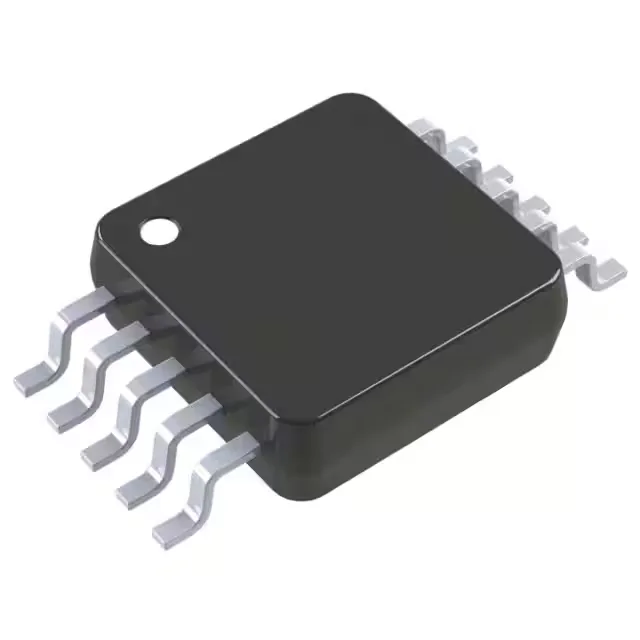
The AD5271BRMZ-20-RL7 is a single-channel, 256-tap digital potentiometer from Analog Devices, configured as a rheostat with a linear taper and a 20 kΩ end-to-end resistance. The SPI interface and cascade pin allow daisy-chaining multiple devices on the same bus, reducing the number of microcontroller GPIOs needed for multi-channel designs. Non-volatile memory stores the wiper position at power-off, eliminating the need for a host processor to re-initialize the setting on each power-up cycle — a practical advantage in systems where the microcontroller boots after the analog rail is stable.
Resistance tolerance and temperature drift — the precision story
The ±1% resistance tolerance is tighter than the ±20% typical of mechanical trimmers, reducing calibration overhead in production. For a 20 kΩ part, the end-to-end resistance is guaranteed within 19.8 kΩ to 20.2 kΩ. This is critical for precision analog circuits where a few ohms of drift would shift a voltage divider or filter cutoff frequency outside the specification window. The 35 Ω typical wiper resistance sets the floor for the lowest resistance setting. At digital code 0, the wiper-to-B terminal resistance is 35 Ω, not zero — a consideration for designs that need a true short circuit at the minimum code.
Supply voltage flexibility and operating range
Dual-supply operation allows the wiper voltage to swing bipolar, useful for AC signal conditioning or bipolar DAC reference trimming. The -40°C to +125°C operating temperature range qualifies the part for industrial and automotive environments — engine bay, outdoor telecom cabinets, or factory-floor sensor interfaces where the ambient temperature exceeds the commercial 85°C limit.
The 10-MSOP package measures 3 mm × 3 mm with a 0.5 mm lead pitch. The fine pitch demands a controlled-impedance PCB process — standard 1 oz copper with 0.5 mm trace/space is adequate for signal routing, but the narrow pads require precise solder paste stencil alignment to avoid bridging. The tape-and-reel packaging is suited for automated pick-and-place assembly. The reel quantity is standard for the 10-MSOP form factor; confirm the exact reel count with the supplier at RFQ time.
RoHS3 compliant with no exemptions, covering EU Directive 2015/863.