Why the 70 V/µs slew rate matters in a general-purpose op-amp
The AD518SH/883B is a single-channel general-purpose op-amp from Analog Devices that trades off the usual micropower bias for a 70 V/µs slew rate — fast enough to handle pulse edges in servo loops or waveform reconstruction without the phase lag that slower parts introduce. With a 12 MHz gain-bandwidth product and a supply current of only 5 µA, it sits in a narrow slot: you get wide bandwidth and fast settling without burning the power budget of a high-speed amplifier. The 2 mV input offset and 120 nA input bias are typical for a bipolar-input design of this era; they are not precision-instrumentation numbers, but for signal conditioning in a control loop or a telemetry channel they are well within the guardband.
Military temperature range and the hermetic TO-99 can
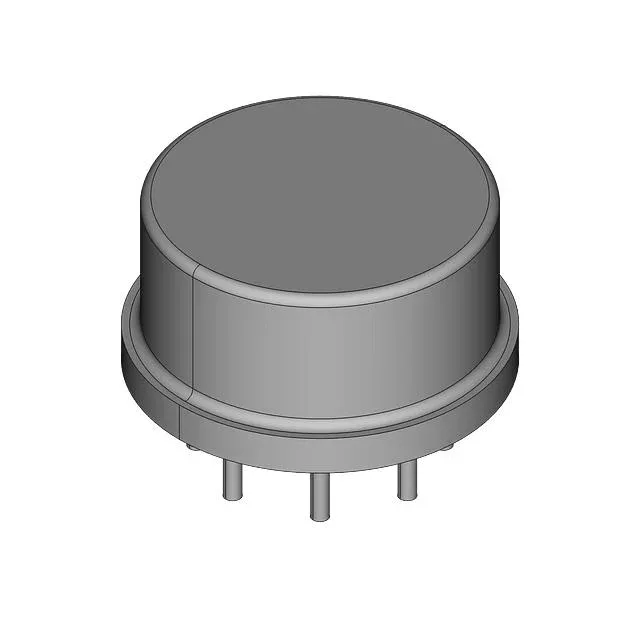
The TO-99-8 metal can is hermetic, preventing moisture ingress. Through-hole mounting allows socketing or soldering into a hybrid module.
Supply voltage and single-rail operation
The supply span is 10 V minimum and 10 V maximum — a fixed ±5 V split supply or a single 10 V rail. There is no headroom for a 12 V or 15 V system; if your board runs on ±15 V, this part clips early. The 10 V span also means the input common-mode range and output swing are centred around half-supply; for single-supply designs, bias the inputs to 5 V and keep the signal within the common-mode limits. The 5 µA quiescent current is nearly independent of supply voltage, so the power dissipation stays low even at the full 10 V rail.
Lifecycle and sourcing — active, but not a commodity part
That said, this is a hermetic-package, military-temp-range device — it is not a high-volume jellybean part stocked on every distributor shelf. The RoHS non-compliant status (leaded solder on the TO-99 leads) is typical for hermetic packages and is accepted under most military and aerospace procurement exemptions.