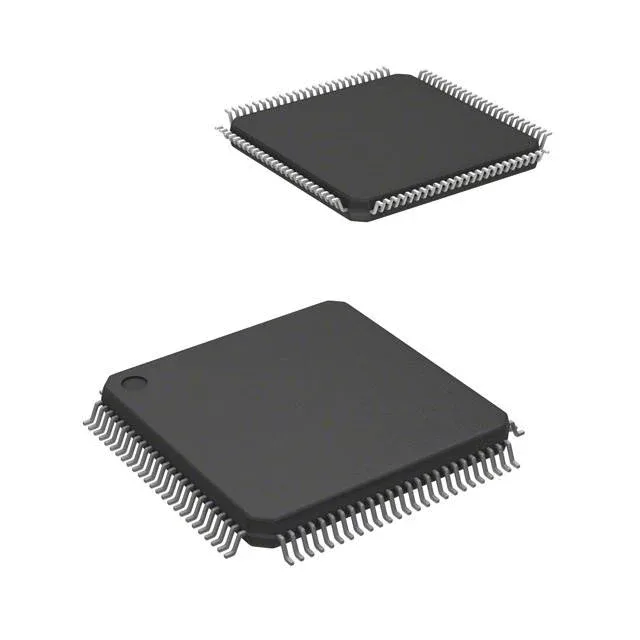
Texas Instruments TM4C123GE6PZI7 — Microcontrollers & Processors (MCU / MPU / DSP)

TM4C123GE6PZI7 Tiva C ARM Cortex-M4F MCU, 80 MHz, 128 KB Flash

MPNTM4C123GE6PZI7
Active

Texas Instruments Tiva™ C Series TM4C123GE6PZI7, 32-bit ARM® Cortex®-M4F MCU, 80 MHz, 128 KB Flash, 32K x 8 RAM, 2K x 8 EEPROM, 100-LQFP, -40°C to 85°C.

$11.4426Ref. price · indicative, final on quote
StockContact for availability
MOQ1 pcs
  • 100% new & originalTraceable channels only — no refurbs, no pulls, no remarked parts.
  • Date & lot codes on quoteStated per line before you commit; label photos on request.
  • MSL-compliant ESD packingMoisture-sealed bags with indicator cards; reels photo-verified.
  • PayPal buyer protectionPay by T/T, PayPal or Payoneer — card payments covered end to end.

Specifications

TM4C123GE6PZI7 Technical Specifications
ParameterValue
SeriesTiva™ C
Mounting typeSurface Mount
Oscillator typeInternal
Program memory typeFLASH
Voltage - supply (Vcc (Vdd))1.08V ~ 3.63V
Operating temperature-40°C~85°C(TA)
Speed80MHz
PackageTube
RAM size32K x 8
Core size32-Bit Single-Core
EEPROM size2K x 8
PeripheralsBrown-out Detect/Reset, DMA, Motion PWM, POR, WDT
ConnectivityCANbus, I²C, IrDA, Microwire, QEI, SPI, SSI, UART/USART, USB OTG
Number of i (O)69
Core processorARM® Cortex®-M4F
Case100-LQFP
Data convertersA/D 22x12b
Program memory size128KB (128K x 8)

Product details

80 MHz Cortex-M4F with FPU — what it means for the control loop

The TM4C123GE6PZI7 runs an ARM Cortex-M4F core at 80 MHz with a single-precision floating-point unit. That FPU is the difference between a control loop that spends cycles on software math emulation and one that handles PID coefficients or sensor fusion in hardware. For a motor drive or HMI panel that needs deterministic response, the 80 MHz clock keeps the bus margin comfortable without pushing the supply to the upper limit of the 1.08 V to 3.63 V range.

128 KB Flash and 32 KB RAM — sizing the firmware budget

128 KB of Flash and 32 KB of RAM place this MCU in the mid-density tier of the Tiva C family. The Flash holds a moderate application stack — a CANopen node with a USB OTG host interface and a 12-bit ADC scan routine fits without external memory. The 2 KB EEPROM handles calibration constants and boot counters that survive a firmware update. Watch the RAM allocation if you are running a full TCP/IP stack or a large frame buffer; those push into the 32 KB ceiling and force external SRAM or a higher-density sibling.

Connectivity and I/O — CAN, USB OTG, and 69 GPIOs

The peripheral set includes CANbus, USB OTG, multiple UART/USART, SPI, I²C, and a QEI for quadrature encoder inputs. That combination is common in industrial control panels where a single MCU handles a CAN fieldbus gateway, a USB programming port, and encoder feedback from a servo axis. 69 GPIOs in the 100-LQFP package leave enough pins for a local keypad and a character display without a port expander. The 22-channel 12-bit ADC covers analog inputs like thermocouple or potentiometer feedback.

Industrial temperature grade and package

Operating temperature range is -40°C to 85°C. The 100-LQFP package measures 14x14 mm.

Frequently asked questions

What is the closest pin-compatible alternative to TM4C123GE6PZI7 in this component family?

The TM4C123 family shares a common 100-LQFP footprint across Flash density options. A higher-density sibling like the TM4C123GH6PM (256 KB Flash) is pin-compatible for a firmware-only upgrade without a board respin.

What is TM4C123GE6PZI7's listed speed?

The core runs at 80 MHz, with a single-precision floating-point unit for hardware math acceleration.