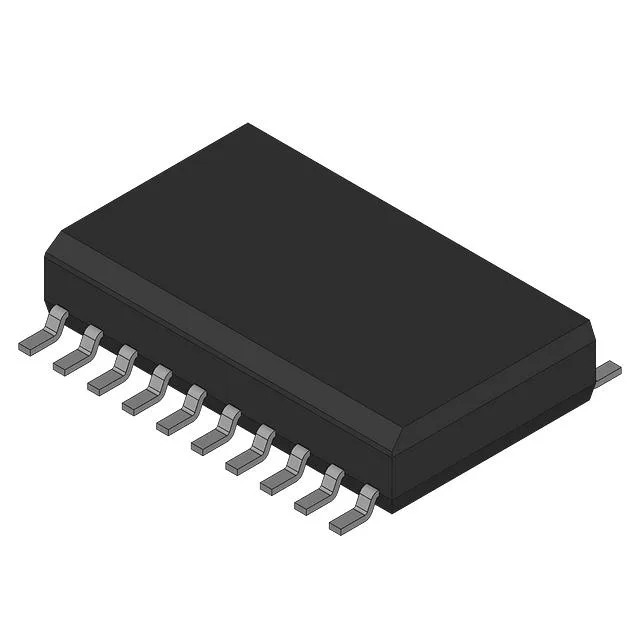
The TI SN74ABT640DB is an 8-bit inverting bus transceiver from the 74ABT family, designed for bidirectional data flow between two buses with inverted logic on the A-to-B path. Its 3-state outputs let you isolate the bus when the output-enable control is deasserted, which is the standard arrangement for shared backplane or memory-bus interfaces where multiple drivers contend for the same lines. The supply range runs from 4.5V to 5.5V, so this is a straight 5V part — no 3.3V or mixed-voltage operation without level translation. Output drive is rated at 32 mA source and 64 mA sink, which gives it the headroom to drive heavily loaded parallel buses or long traces in a backplane. Packaged in a 20-SSOP (5.30 mm body width), it occupies about the same board area as a SOIC-20 but with tighter pin pitch — something to check against the existing footprint if you're replacing an older DIP or SOIC transceiver.
Output drive and bus loading — the 32 mA / 64 mA split
The asymmetric drive — 32 mA high, 64 mA low — is typical of BiCMOS output stages in the ABT series. The stronger sink side handles the higher capacitive load of a bus in the low state, which is where most of the transient current flows during a falling edge. If you're driving a 50 pF backplane trace at 50 MHz, the 64 mA sink keeps the fall time inside the bus timing budget; the 32 mA source is adequate for the rise. For lighter loads (point-to-point or short PCB traces), both edges will be clean without external buffers.