The STMicroelectronics M24C01-RDS6TG is a 1Kbit serial EEPROM with an I²C interface, organized as 128 x 8 bits. It operates from 1.8V to 5.5V, clocks at 400 kHz, and delivers a 900 ns access time with a 5 ms write cycle for word or page writes. The 8-MSOP package (3.00 mm width) suits space-constrained surface-mount designs.
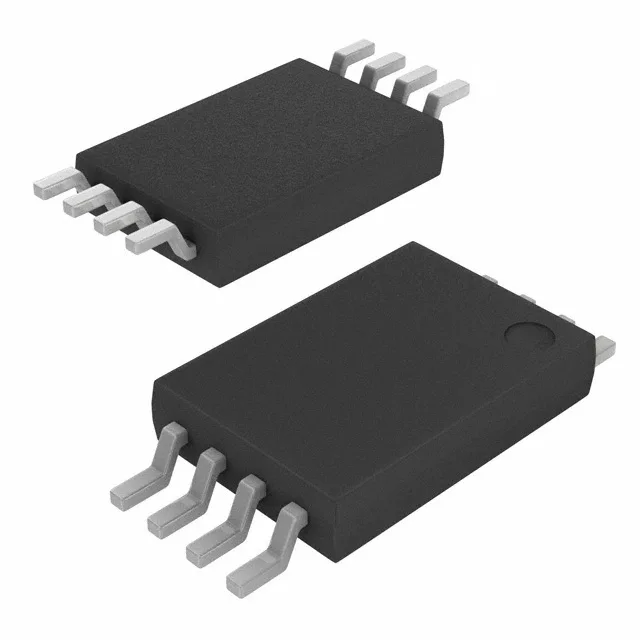
STMicroelectronics M24C01-RDS6TG 1Kbit I²C EEPROM, 8-MSOP, Obsolete
MPNM24C01-RDS6TG
Obsolete
STMicroelectronics M24C01-RDS6TG, 1Kbit I²C serial EEPROM, 8-MSOP (3.00 mm width), 1.8V–5.5V supply, 400 kHz clock, 900 ns access, 5 ms write cycle, −40°C to 85°C, Tape & Reel.
$0.2542Ref. price · indicative, final on quote
Independent supplier — new & surplus stockAuthenticity-screened · ESD-safe packingListing updated Jul 2026
Specifications
| Parameter | Value |
|---|---|
| Memory type | Non-Volatile |
| Mounting | Surface Mount |
| Supply voltage | 1.8V ~ 5.5V |
| Clock frequency | 400 kHz |
| Memory interface | I²C |
| Operating temperature | -40°C ~ 85°C (TA) |
| Package | Tape & Reel (TR) |
| Technology | EEPROM |
| Access time | 900 ns |
| Memory size | 1Kbit |
| Memory format | EEPROM |
| Case | 8-TSSOP, 8-MSOP (0.118\", 3.00mm Width) |
| Memory organization | 128 x 8 |
| Write cycle time - word, page | 5ms |
Product details
Frequently asked questions
What is the replacement for M24C01-RDS6TG?
STMicroelectronics does not list a single direct successor for the M24C01-RDS6TG. Pin-compatible active alternatives exist within the M24C01 family, such as the M24C01-WMN6TP (SOIC-8) or M24C01-RDW6TP (TSSOP-8). Verify package and temperature grade against your design before substituting.
What is the operating voltage range of M24C01-RDS6TG?
The M24C01-RDS6TG operates from 1.8V to 5.5V.
What is the memory size of M24C01-RDS6TG?
The M24C01-RDS6TG has a memory size of 1Kbit, organized as 128 x 8 bits.