Tight-footprint MCU for space-constrained control
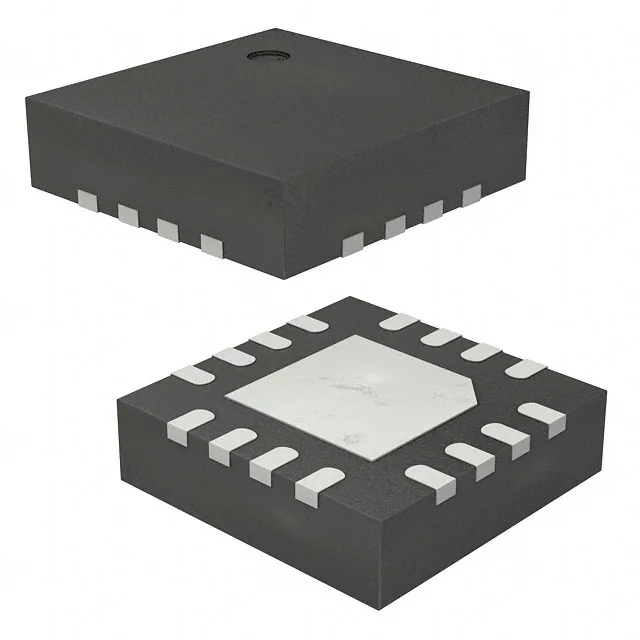
The NXP MKL02Z16VFG4 is a 32-bit ARM Cortex-M0+ microcontroller from the Kinetis KL02 series, clocked at 48 MHz with 16 KB Flash and 2 KB RAM. It packs 14 general-purpose I/O, a 6-channel 12-bit ADC, and I²C, SPI, and UART serial interfaces into a 16-QFN package measuring 3x3 mm with an exposed pad for thermal management. The supply range of 1.71 V to 3.6 V and operating temperature from -40°C to 105°C suit it for industrial sensor nodes, battery-powered handhelds, and compact control modules where board area is the tightest constraint.
The 48 MHz Cortex-M0+ core delivers single-cycle I/O access and a two-stage pipeline that keeps interrupt latency low. For a typical sensor-read-and-actuate loop — say a 12-bit ADC conversion followed by a PWM update — the part can close the loop in under a microsecond. That is fast enough for motor commutation at moderate speeds or real-time feedback on a small industrial actuator, but not for high-rate digital signal processing; the M0+ lacks a hardware multiplier pipeline for heavy number crunching.
The 16-QFN with exposed pad (3x3 mm) requires a solder-paste stencil opening under the pad for thermal and electrical ground connection. The pad is not a signal pin — it ties to the die attach paddle. Board layout should route the I/O on the outer ring and keep the centre pad clear for a single large via or a grid of small vias to the ground plane. No special reflow profile beyond standard lead-free; the package is moisture sensitivity level 3, so bake before reflow if the shelf life has been exceeded.