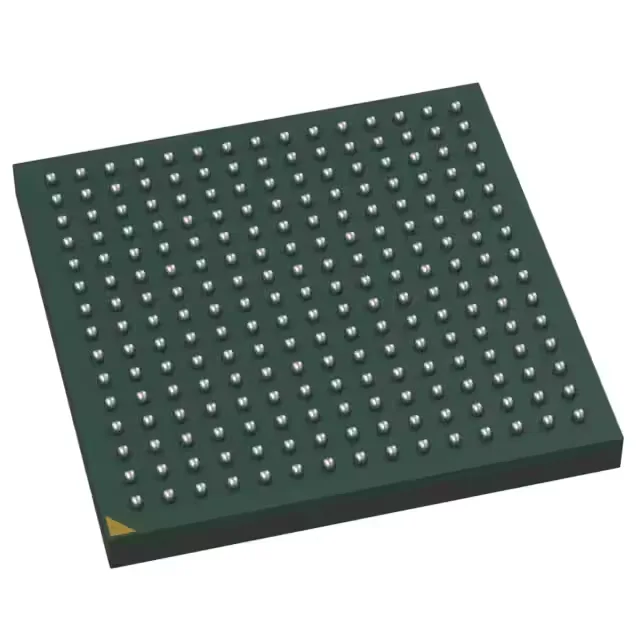
NXP USA Inc. MIMXRT1062XVN5B — Microcontrollers & Processors (MCU / MPU / DSP)

NXP MIMXRT1062XVN5B MCU, ARM Cortex-M7 500 MHz, 225BGA

MPNMIMXRT1062XVN5B
Active

NXP RT1060 series, ARM Cortex-M7 32-bit MCU, 500 MHz, 1M x 8 SRAM, 128 KB ROM, 149 I/O, CANbus/Ethernet/USB OTG, 225-LFBGA, -40 to 125°C.

$19.5300Ref. price · indicative, final on quote
Packaging225-LFBGA
RoHSROHS3 Compliant
SeriesRT1060
Independent supplier — new & surplus stockAuthenticity-screened · ESD-safe packingListing updated Jul 2026

Specifications

MIMXRT1062XVN5B specifications
ParameterValue
SeriesRT1060
MountingSurface Mount
Oscillator typeInternal
Program memory typeROM
Voltage - supply (Vcc (Vdd))3V ~ 3.6V
Operating temperature-40°C~125°C(TJ)
Speed500MHz
PackageTray
RAM size1M x 8
Core size32-Bit
PeripheralsBrown-out Detect/Reset, DMA, LCD, POR, PWM, WDT
ConnectivityCANbus, EBI/EMI, Ethernet, I²C, MMC/SD/SDIO, SAI, SPDIF, SPI, UART/USART, USB OTG
Number of i (O)149
Core processorARM® Cortex®-M7
Case225-LFBGA
Data convertersA/D 20x12b
Program memory size128KB (128K x 8)

Product details

The NXP MIMXRT1062XVN5B is a 32-bit MCU built around an ARM Cortex-M7 core clocked at 500 MHz, part of the RT1060 crossover processor family. It carries 1 MB of SRAM and 128 KB of ROM, but no internal Flash — code executes from external memory via the EBI/EMI interface. With 149 I/O and a rich connectivity set including CANbus, Ethernet, USB OTG, and SDIO, this part is aimed at high-throughput edge applications: real-time motor control, HMI panels, industrial gateways, and audio processing.

500 MHz Cortex-M7 — what the speed buys you

At 500 MHz, this core outruns typical Cortex-M4 MCUs by a factor of three to four on integer workloads, and the single-cycle multiply-accumulate (MAC) with double-precision FPU handles sensor fusion or FFTs without a separate DSP. The speed matters most when the system must service Ethernet, USB, and a display refresh simultaneously without stalling the control loop. For designs that need deterministic interrupt latency under 20 cycles, the M7's tight vector table and TCM access keep jitter low.

External memory required — no internal Flash

This part boots from internal ROM and runs code from external Flash or PSRAM via the EBI/EMI bus. The 128 KB ROM holds a bootloader and factory firmware; all application code must reside off-chip. The 1 MB SRAM is generous for data buffers and stack, but the BOM must include a serial NOR Flash (QSPI) or parallel NAND for program storage. That trade-off buys flexibility — you can size the Flash to the firmware, not the MCU's fixed density — but it adds a PCB trace layer and a second component to qualify.

225-ball LFBGA (13x13 mm MAPBGA). Surface-mount only. 149 I/O distributed across the ball grid.

Frequently asked questions

Does MIMXRT1062XVN5B require external memory?

Yes, this MCU has 128 KB of ROM and 1 MB of SRAM but no internal Flash for code storage. Application firmware must be stored in external Flash or PSRAM accessed via the EBI/EMI or QSPI interface.

What is the pinout of MIMXRT1062XVN5B in 225BGA?

The MIMXRT1062XVN5B uses a 225-ball LFBGA (13x13 mm MAPBGA) package. The pinout is defined in the NXP RT1060 reference manual; the base product number MIMXRT1062 shares the same ball map across speed grades.

What are the key differences between MIMXRT1062XVN5B and MIMXRT1062DVL6A?

Both share the same RT1060 core, package, and pinout. The primary difference is the speed grade: the XVN5B runs at 500 MHz, while the DVL6A is a lower-speed variant. Temperature range and peripheral sets are identical.