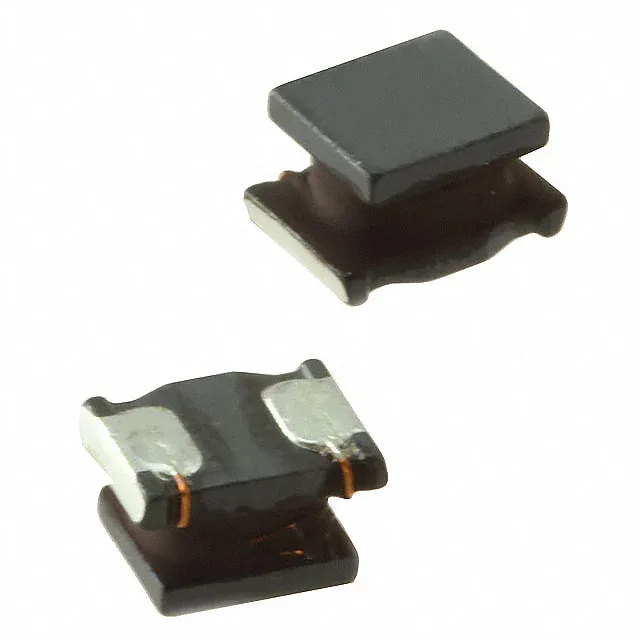
330 µH, 85 mA — what the ratings mean for the BOM
The LQH43NH331J03L: The 330 µH inductance at 1 MHz test frequency with ±5% tolerance suits filtering and energy-storage roles where the nominal value must stay tight across reels. The 85 mA current rating is the DC bias at which the inductance typically drops 10% — above that the ferrite core begins to saturate, so budget headroom if the ripple current pushes the peak above 85 mA. DC resistance is 7.44 Ohm maximum. At 85 mA the I²R loss is roughly 54 mW — negligible in most automotive modules, but worth checking if the inductor sits in a high-ambient spot where the self-heating adds to the 125°C ceiling. Self-resonant frequency is 3.6 MHz. Above that point the parasitic capacitance between windings dominates and the impedance drops — the part behaves as a capacitor, not an inductor. Keep the switching or ripple frequency below ~1/3 of SRF for predictable filtering.
AEC-Q200 — what it certifies for the deployment
AEC-Q200 qualification means this inductor passed the automotive passive-component stress tests: temperature cycling, moisture resistance, mechanical shock, vibration, and solderability. Unshielded drum-core construction means the magnetic field extends beyond the package — adjacent traces or components in the 1812 footprint may couple noise. In a dense layout, keep sensitive analog lines at least one part-width away or switch to a shielded variant in the same LQH43 family.
1812 footprint — board-fit note
The ferrite core and wirewound construction mean the part is taller than a multilayer chip inductor of the same footprint — confirm clearance under the enclosure or adjacent tall components. Supplied on tape-and-reel (embossed carrier) per EIA-481; cut-tape available for prototype or low-volume builds. The reel quantity is the standard 1812 pitch — order multiples of the full reel to avoid cut-tape premium.