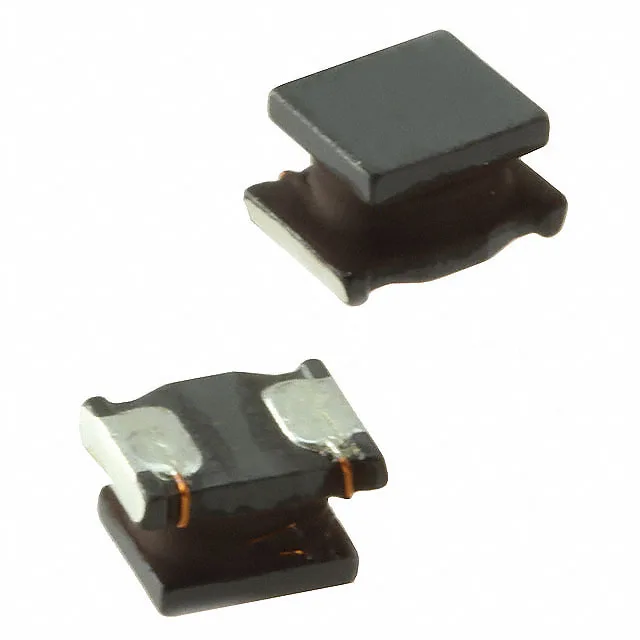
22 µH, 420 mA — what the ratings mean for the BOM line
The LQH43CN220K03L is a 22 µH unshielded wirewound inductor in the Murata LQH43 series, rated for 420 mA continuous current with a maximum DC resistance of 600 mOhm. The 22 µH value suits filtering and energy storage in DC-DC converter output stages or signal conditioning where the inductance holds steady across the operating current range. The 420 mA rating sets the load ceiling — the inductor saturates or overheats above this, so the downstream circuit's peak draw must stay under that figure with margin for ripple current. The 600 mOhm DCR defines the I²R conduction loss at rated current: at 420 mA the inductor dissipates roughly 106 mW internally. In a compact 1812 package without forced airflow, that heat raises the component temperature above ambient, so the DCR figure is the one to budget against the thermal design, not just the current number.
Self-resonant frequency and unshielded construction
The self-resonant frequency (SRF) is 15 MHz — above this point the inductor's parasitic capacitance dominates and the component behaves capacitively. For a buck converter switching at 500 kHz the SRF gives plenty of headroom, but for a 5 MHz or higher switching regulator the margin narrows and the effective inductance drops near the SRF. The unshielded construction means the magnetic field radiates from the drum core — layout should keep sensitive analog traces, ground planes, and adjacent inductors at least a few millimetres away to avoid coupling. The ferrite core material handles the 22 µH value with a ±10% tolerance tested at 1 MHz.
The surface-mount terminations are compatible with reflow soldering profiles typical for lead-free assemblies. No shielding can means the component's magnetic field is exposed, so the PCB layout should avoid routing sensitive signal traces directly under or alongside the inductor body. The base product number LQH43CN covers the series variants; the full suffix 220K03L encodes the 22 µH value, ±10% tolerance, and packaging code.