4.7 µH at 1 A — what the ratings mean for your DC-DC rail
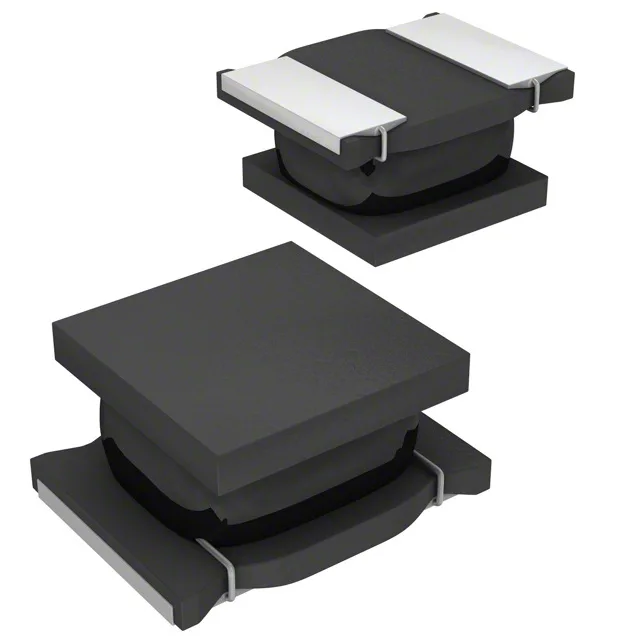
The LQH3NPN4R7MMEL is a 4.7 µH shielded wirewound inductor in Murata's LQH3 series, rated for 1 A continuous with a saturation current of 1.3 A. The 120 mOhm max DCR sets the copper loss — at 1 A that's 120 mW of self-heating, which is manageable in most DC-DC converter layouts but worth checking against your efficiency budget. The 40 MHz self-resonant frequency means this inductor stays inductive well above the 1-2 MHz switching frequencies common in point-of-load converters. Below SRF the impedance is dominated by the inductance; above it the part looks capacitive and stops filtering. For a 500 kHz buck or a 2 MHz boost, you have plenty of headroom before parasitic effects take over. Shielding matters when the inductor sits next to sensitive analog traces or RF sections. The ferrite core and shield contain the magnetic field — a non-shielded drum core would couple into adjacent copper pours and inject ripple into the ground plane. In a mixed-signal board, the shielded construction saves a layout iteration.
Active production — no last-time-buy pressure
Murata lists this part as Active. The 1212 (3030 Metric) footprint is a common size — 3.00 mm x 3.00 mm with a 1.50 mm seated height. It fits the standard inductor pad layout used across multiple Murata and competitor series, so second-sourcing is straightforward if supply tightens.
That covers most industrial and automotive under-hood environments — the 105°C ceiling is the ambient temperature, not the inductor's internal hot spot. Self-heating from the 1 A current adds to the ambient, so in a 85°C enclosure the part sees roughly 90-95°C junction, still inside the rated envelope. The ±20% tolerance on the 4.7 µH value is typical for power inductors — the inductance drops with DC bias, so the 20% band covers the tolerance plus the initial drop. At 1 A the saturation current is 1.3 A, so the inductance roll-off starts above the rated current, not before it.