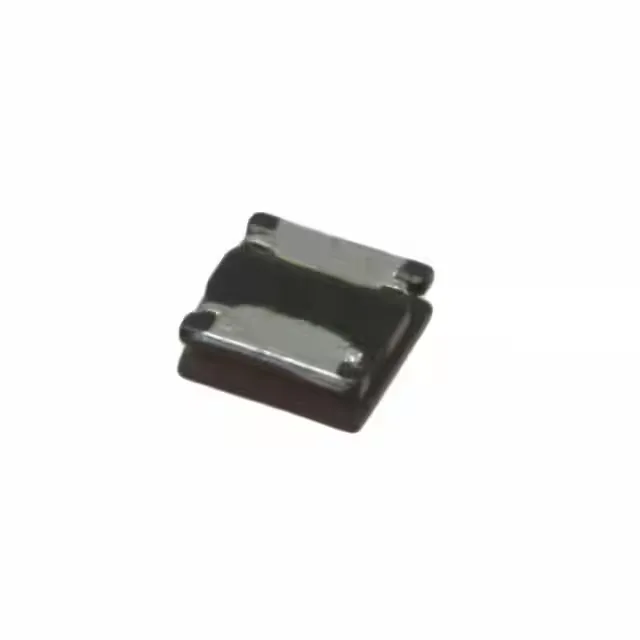
Obsolete — sourcing strategy for the LQH3NPN470MMRE
For replacement evaluation, the key parametric boundaries are the 47 µH inductance at 1 MHz test frequency, the 460 mA continuous current rating, and the 320 mA saturation current ceiling.
47 µH shielded inductor — what the ratings mean for your power rail
The 47 µH inductance with a 460 mA current rating suits output filtering for low-power DC-DC converters — think POL regulators for FPGAs or MCU core rails where ripple attenuation matters. The 1.368 Ohm max DCR sets the I²R conduction loss: at 460 mA the self-heating is roughly 0.29 W, which the 1212 (3030) package must dissipate into the board copper. The 320 mA saturation current (Isat) is the hard ceiling — above this the inductance drops sharply. A converter with a 460 mA peak inductor current will push the core into saturation; derate to 320 mA or lower for the actual peak ripple current plus DC bias. Shielded construction contains the magnetic field — critical when the inductor sits near sensitive analog or RF circuits on the same board. The ferrite core and drum wirewound construction deliver the 47 µH in a 3.00 mm × 3.00 mm footprint with a 1.50 mm seated height. Self-resonant frequency is 10 MHz — above that the component behaves capacitively. For a 500 kHz to 2 MHz switching regulator, the 10 MHz SRF provides adequate margin; pushing the switching frequency above 3-4 MHz risks entering the capacitive region.
Footprint and reflow — what the 1212 package needs from your line
The 1212 (3030 Metric) package measures 3.00 mm × 3.00 mm with a 1.50 mm max height. The surface-mount pads are standard for this form factor — no exotic footprint. The part ships on Tape & Reel (TR) or Cut Tape (CT), compatible with standard 8 mm carrier tape for pick-and-place. The part survives standard lead-free reflow profiles (peak 260°C) without issue; no special moisture sensitivity level is stated, but for a ferrite-core inductor popcorning risk is negligible compared to ICs.