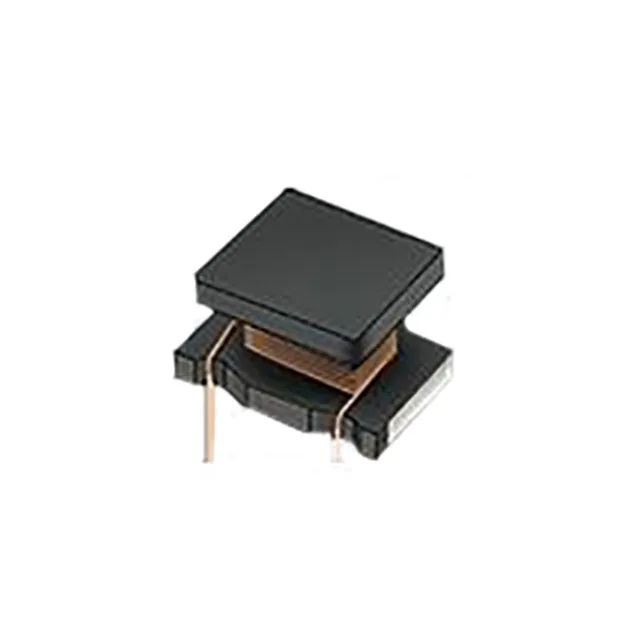
100 µH at 250 mA — the thermal ceiling vs the saturation floor
The LQH32PZ101MN0L is a 100 µH wirewound ferrite-core inductor from Murata's LQH32 series, rated 250 mA continuous current with a DCR of 3.24 Ω max. The I²R loss at 250 mA is about 200 mW, which sets the thermal limit in free air at 105°C ambient. The saturation current (Isat) is 180 mA — lower than the rated current. That means the inductance drops by 10% at 180 mA, and the part saturates before it reaches its thermal limit. For a DC-DC converter with ripple current, the peak inductor current must stay below 180 mA or the output voltage goes out of regulation.
AEC-Q200 — what it buys you
Qualified to AEC-Q200, the automotive passive-component stress test. The part has passed 1000-hour biased humidity, thermal shock (-40°C to 125°C), mechanical shock and vibration, and solder heat resistance. This is the standard for under-hood and cabin electronics in production vehicles — not a defence-grade screening, but the same test flow used by tier-1 automotive suppliers. It does not reach the 125°C+ required for engine-bay hot spots or exhaust-adjacent mounting.
Package and board-fit
The shielded ferrite core keeps flux contained, so adjacent traces on a 4-layer board see minimal coupling. The self-resonant frequency is 8 MHz, well above the 1-2 MHz switching frequency of automotive buck converters, so the inductor behaves as an inductor in that band.