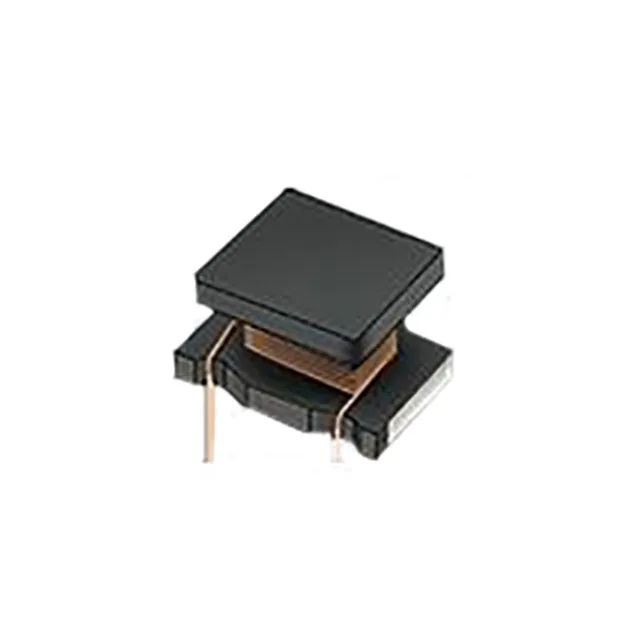
What the 780 mA rating means for your power rail
The LQH32NH1R0M23L is a 1 µH unshielded wirewound inductor rated for 780 mA continuous current with a maximum DC resistance of 72 mΩ. That DCR at 780 mA drops about 56 mV and dissipates roughly 44 mW — negligible in most DC-DC converter output filters, but the voltage drop matters if the inductor sits between the regulator and a 1.2 V core rail where every millivolt counts.
AEC-Q200 — what it certifies for the BOM
AEC-Q200 qualification means this inductor passed the automotive-grade passive component stress tests: thermal shock, humidity bias, mechanical shock, vibration, and solder heat resistance.
Self-resonant frequency and the switching regulator ceiling
With a self-resonant frequency of 100 MHz, this inductor stays inductive well above the 1–4 MHz switching frequency of most automotive-grade buck converters. The Q factor of 20 at 1 MHz indicates moderate AC losses — acceptable for output filtering but not ideal for high-Q tank circuits or RF matching where a higher Q inductor would reduce insertion loss.
Package and board-fit for the pick-and-place line
The unshielded construction means the inductor's magnetic field extends beyond the package; keep sensitive analog traces or low-level sensor inputs at least one package width away to avoid coupling. Available in tape-and-reel for automated assembly; the cut-tape option suits prototyping or rework.
Sourcing and lifecycle posture
This is a current-production part, sourced through authorized distribution channels. For a BOM line that requires AEC-Q200 traceability, the LQH32NH1R0M23L carries the full automotive-grade pedigree without the supply risk of a NRND or obsolete listing.