The three specs that decide fit
The LQH32MN4R7K23L: Inductance is 4.7 µH at 1 MHz test frequency, ±10 % tolerance — a standard value for DC-DC converter output filters and low-frequency signal decoupling in the 1–10 MHz range. Rated current is 270 mA, with a maximum DC resistance of 1.2 Ohm. The DCR is the first thing to check against your load current: at 270 mA the resistive loss is 87 mW, which is fine for a 1210 body, but if your circuit draws 300 mA steady-state the core saturates and inductance collapses.
Construction and core — why it matters on the bench
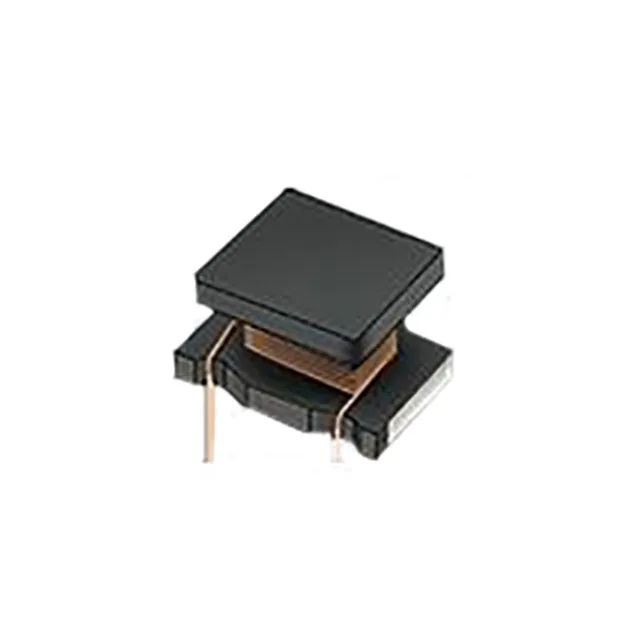
It is a drum-core wirewound construction on a ferrite core, unshielded. The unshielded build means the external field couples into nearby traces — keep a ground plane under the part and leave at least one component width of clearance to sensitive analog or RF paths.
It covers most indoor and outdoor equipment but does not reach the +105 °C or +125 °C needed for under-hood automotive or high-density power modules.
The nonstandard case code means the pad layout follows the 1210 industry standard; no special footprint required.
Q factor and self-resonant frequency — signal integrity constraints
Q factor is 20 at 1 MHz — moderate, typical for a ferrite-core power inductor. Self-resonant frequency is 31 MHz, so the inductor behaves as an inductor up to about 10 MHz; above that the parasitic capacitance dominates and the impedance rolls off. Do not use it as a filter choke above 10 MHz.