Inductance, current, and DC resistance — the three numbers that decide the fit
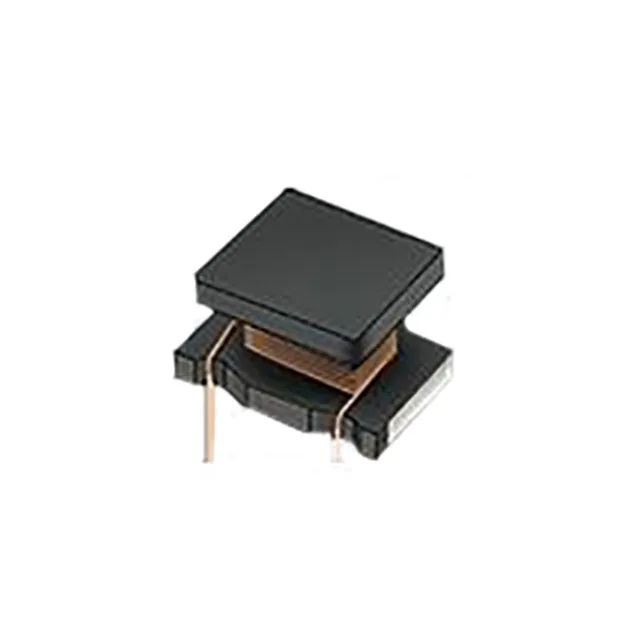
The LQH32MN271K23L is a 270 µH unshielded wirewound inductor in Murata's LQH32 series, built on a ferrite drum core. The 65 mA current rating and 12.5 Ohm maximum DCR set the usable load range — at full rated current the self-heating from I²R losses is about 53 mW, well within the 85°C ambient ceiling for a 1210-sized part. The unshielded construction means the magnetic field extends beyond the component body — adjacent traces carrying sensitive analog signals should be kept at least one part-width away to avoid parasitic coupling. For power rail filtering or DC-DC converter output chokes where the radiated field is contained by the ground plane, this is rarely a concern.
Q factor and self-resonant frequency — where the inductor stops being an inductor
The Q factor is 40 minimum at 796 kHz — a moderate Q for a 270 µH wirewound, meaning the AC losses at that frequency are about 2.5 % of the reactance. Above the 5 MHz self-resonant frequency the impedance becomes capacitive; the part is usable as an inductor only well below that point, typically up to 2-3 MHz in practice. The inductance is tested at 1 MHz, which sits between the Q test frequency and the SRF — a common test point for inductors in this value range. The ±10 % tolerance covers process variation; for a tuned filter or resonant tank circuit, the actual value should be verified at the operating frequency.
1210 footprint and reflow profile considerations
The ferrite core is brittle — board flex during depaneling or rework can crack the drum; a 0.5 mm keep-out around the body is recommended to avoid stress transfer from the solder fillet. Surface-mount reflow follows standard lead-free profiles (peak 260°C, 30 seconds above 255°C). The ferrite material does not absorb moisture, so no bake-out is required before reflow even after long storage.