1.5 µH, 400 mA — the DC bias ceiling and the self-resonant floor
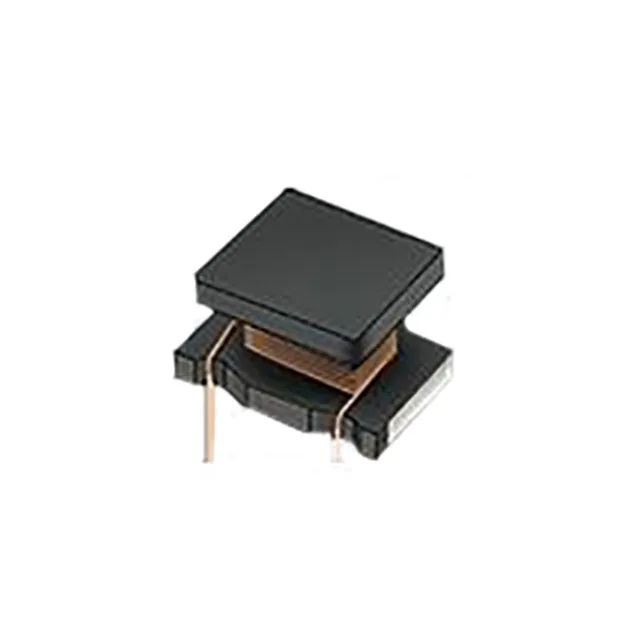
The Murata LQH32MN1R5K23L is a 1.5 µH drum-core wirewound inductor in the LQH32 series, built on a ferrite core. The 400 mA current rating is the DC bias limit — push past it and the inductance collapses as the core saturates, so the real-world ceiling for a power rail filter is that 400 mA, not the peak current the load draws in a transient. The self-resonant frequency sits at 75 MHz, which sets the usable bandwidth: below that the part behaves as an inductor; above it the parasitic capacitance dominates and the impedance turns capacitive. For a 1.5 µH value, 75 MHz SRF is typical of a wirewound construction at this footprint — the winding capacitance and core losses define the roll-off.
Unshielded construction — placement matters
This is an unshielded inductor. The magnetic field radiates from the drum core, so adjacent traces, ground pours, and especially other magnetics within a few millimetres will couple. For a 1.5 µH part in a 1210 footprint, keep a keep-out zone of at least one part width around it unless the layout is in a shielded compartment or the coupling is benign (e.g., the inductor is in a low-impedance filter and the neighbour is a DC line). The unshielded construction means the magnetic field extends beyond the package boundary, so a shielded sibling (LQH32P series, same footprint) would be the drop-in replacement if EMI coupling becomes an issue during EMC pre-compliance.
Because the part is active and the LQH32 series is a long-running Murata line, the risk of an abrupt EOL notice is low for the foreseeable future. The 1210 footprint and 1.5 µH value are common enough that a second-source parametric match (same inductance, current rating, DCR, and SRF) exists from other manufacturers if a dual-source BOM hedge is required.