12 µH at 180 mA — what the ratings mean for the BOM
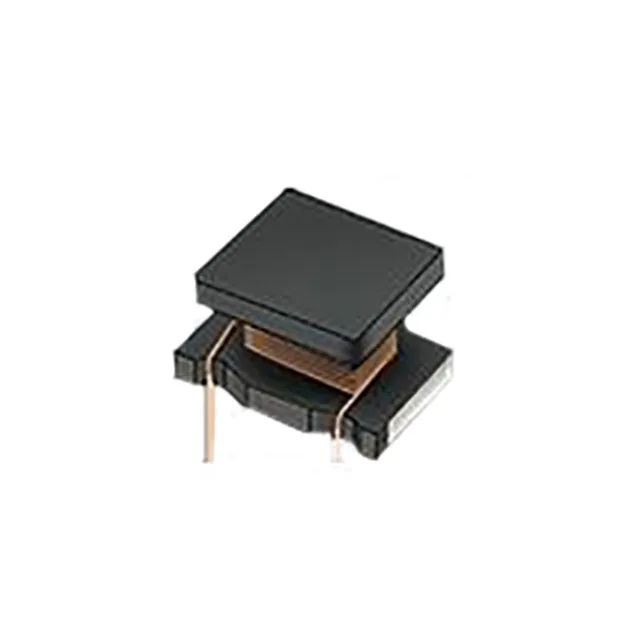
The LQH32MN120K23L is a 12 µH drum-core wirewound inductor from Murata's LQH32 series, rated for 180 mA continuous current with a maximum DC resistance of 2 Ω. That DCR at this current means about 65 mW of copper loss at full load — negligible for most filtering and decoupling roles, but worth checking if the trace runs near a temperature-sensitive device on the board. The self-resonant frequency of 18 MHz tells you the inductor stops looking inductive above that point — for a 1 MHz switching regulator output filter, it has plenty of headroom, but for RF matching above 10 MHz the parasitic capacitance starts dominating.
Unshielded construction — placement matters
This is an unshielded drum-core design, meaning the magnetic field radiates beyond the component body. In a dense layout, keep sensitive traces or other magnetics at least a few mm away — the field can couple into adjacent signal paths, especially at higher frequencies near the SRF.
Active production — no last-time-buy pressure
The Q factor of 35 at 1 MHz is typical for a ferrite-core wirewound in this size class — adequate for signal filtering where insertion loss matters, but not a high-Q part for narrowband RF tank circuits.
Sourcing and fit check
The ±10% tolerance on 12 µH is standard for power and signal filtering; if your design needs tighter tolerance, the LQH32 series also includes ±5% variants in the same footprint.