Automotive-grade 256 Mbit NOR Flash with SPI Quad I/O
The Micron MT25QL256ABA8E12-0AAT TR is a 256 Mbit NOR Flash memory organized as 32 M x 8 bits, using the SPI Quad I/O interface for read and program operations. The SPI clock frequency of 133 MHz supports fast code shadowing and data logging, while the supply voltage range of 2.7 V to 3.6 V covers standard logic rails.
What the 133 MHz SPI clock and 256 Mbit density mean for your BOM
The 133 MHz SPI Quad I/O interface delivers a sustained read throughput that keeps a modern MCU's instruction cache fed during execute-in-place (XIP) boot sequences. For a design that shadows firmware to RAM at power-on, the 256 Mbit density holds roughly 32 MB of code — enough for a full-featured AUTOSAR stack or a Linux bootloader. The page program time of 2.8 ms and block erase time of 8 ms are typical for this density class; firmware update strategies should budget for those write latencies. The AEC-Q100 qualification and -40°C to 105°C temperature range are the deciding factors over the commercial-temperature sibling rated only to 85°C.
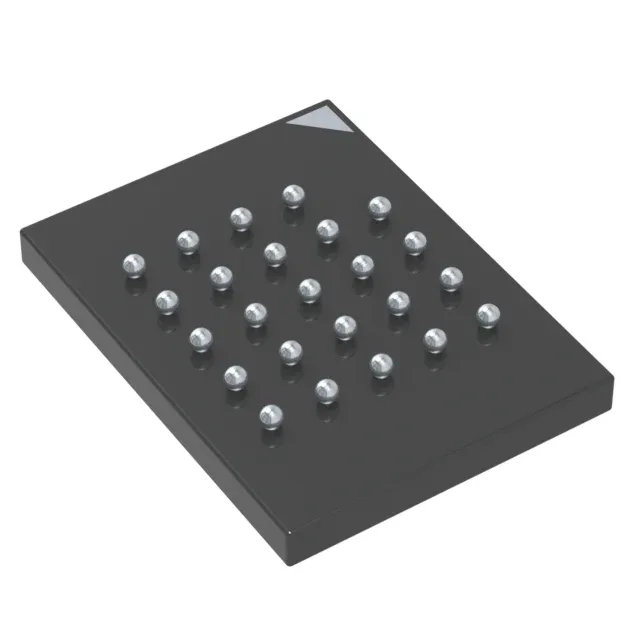
Package and mounting: 24-TBGA footprint
The part comes in a 24-ball Thin Profile Ball Grid Array (24-T-PBGA) measuring 6 mm x 8 mm. It is a surface-mount package intended for reflow soldering.
This is a production-grade part suitable for BOM freeze in programs with multi-year manufacturing runs. The ROHS3 compliance ensures it meets current environmental regulatory requirements for automotive and industrial markets.