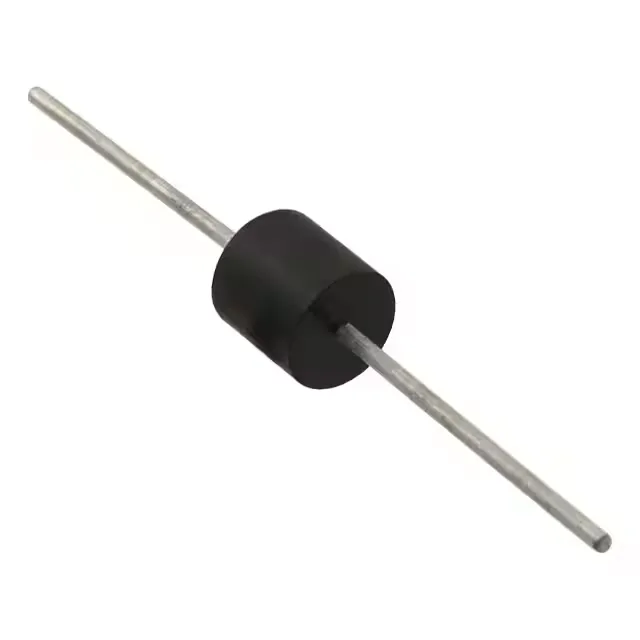
The 5KP11CA-TP: The 5 kW peak pulse rating is the headline figure for this Zener TVS — it tells you the part survives a single transient event of that magnitude without degradation. In practice, a lightning-surge event or inductive load dump on a 12 V rail delivers a high-energy spike measured in microseconds; the 5 kW figure defines the maximum clamping stress the body absorbs during that event. For a circuit running on nominal 12 V rails, an 11 V standoff gives normal operation headroom, the 12.2 V breakdown threshold is where the TVS begins to conduct, and the 18.2 V clamping ceiling is what the downstream load actually sees at peak pulse current.
Protection window — three voltages, one design decision
The reverse standoff of 11 V sets the maximum working voltage in the unbiased (forward-bias) direction; the minimum breakdown of 12.2 V is where the bidirectional suppressor begins clamping. That narrow window — 11 V to 12.2 V — means the part activates quickly on a 12 V rail without false triggering during normal operation. The clamping voltage of 18.2 V is the ceiling the protected circuit sees at peak pulse current; selecting a downstream IC with an absolute-maximum rating above 18.2 V completes the protection chain.
Bidirectional suppression for AC and dual-rail rails
With one bidirectional channel, the part clamps both polarities on a single device — suitable for AC lines, dual-supply rails where either rail can ring positive or negative, or anywhere the transient polarity is not guaranteed. A unidirectional TVS would require two devices back-to-back for the same coverage.