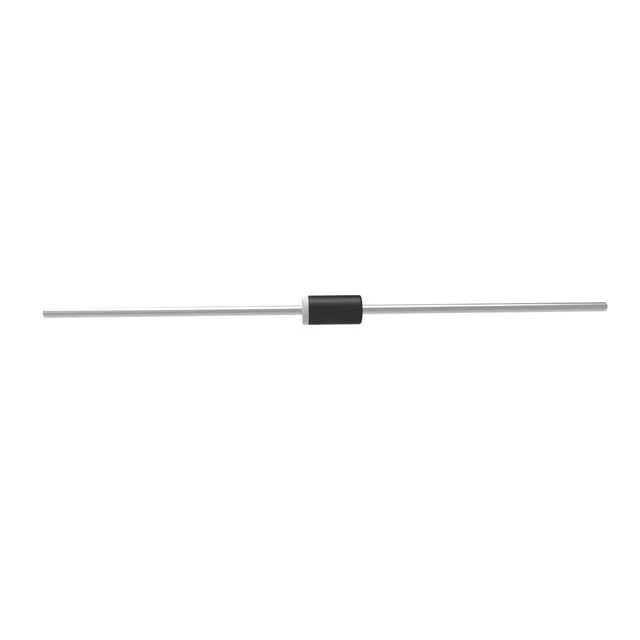
Transient suppression for 5 V and 6 V rails
The 1.5KE6.8CA-TP: The breakdown voltage range starts at 6.45 V, so the device begins conducting before the protected rail exceeds its abs-max rating.
Peak pulse power and clamping performance
The clamping voltage of 10.5 V at the full 144.8 A peak pulse current means the downstream circuitry sees no more than 10.5 V across the TVS during the event, which keeps a 5 V rail inside its 7 V absolute-maximum window even under a direct lightning-coupled transient. The reverse standoff voltage of 5.8 V is the maximum DC voltage the TVS can sit across without conducting leakage current — it matches the nominal operating voltage of a 5 V rail with margin. The minimum breakdown voltage of 6.45 V ensures the device does not clip normal rail ripple or startup overshoot.
Automotive grade and deployment environment
The 1.5KE6.8CA-TP carries an automotive grade designation, meaning it is qualified for the temperature and reliability demands of vehicle electrical systems. The device is also listed for telecom applications, where the 1500 W pulse rating covers the primary-side surge requirements of GR-1089 and ITU-T K.20/K.21.
Package and board integration
The DO-201AE axial-lead package (through-hole) is the standard footprint for 1500 W TVS diodes. The axial leads insert into plated through-holes on the PCB and are wave-soldered — the large body and lead diameter handle the thermal pulse of a 1500 W surge without lifting pads or cracking solder joints. The supplier device package is also DO-201AE, so the mechanical outline matches the JEDEC standard for this power class. The bulk packaging means the parts ship in a tube or bag, not on tape-and-reel — this is the standard delivery format for through-hole axial diodes and is compatible with hand-insertion or selective-solder assembly. No moisture sensitivity level (MSL) applies to the DO-201AE body; it is a hermetic glass-passivated junction that does not require bake-out before soldering.