Clamping voltage and the rail it protects
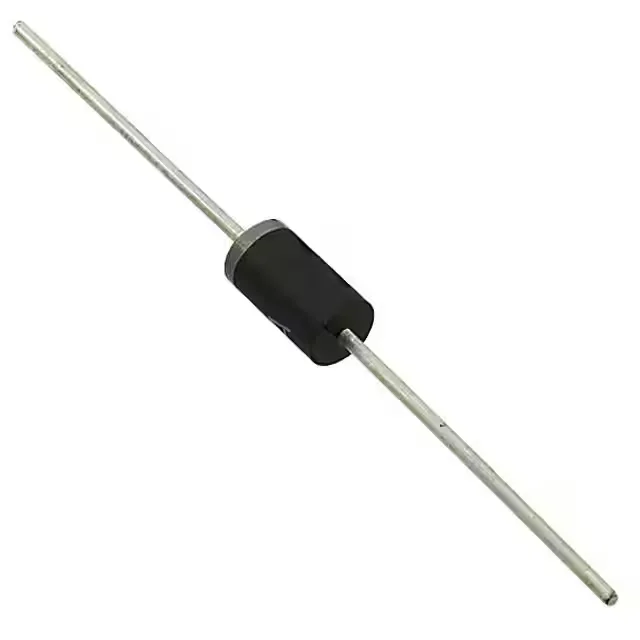
The 1.5KE39A-TP is a 1500 W unidirectional TVS diode from Micro Commercial Co, built to clamp transients on a 33.3 V nominal rail. Its 37.1 V minimum breakdown ensures the device stays off the line during normal operation, while the 53.9 V maximum clamping voltage at peak pulse current (Ipp) limits the voltage the downstream circuitry sees during a surge event. This is a through-hole part in the DO-201AE axial package — a common footprint for industrial and telecom board-level protection where a soldered-in, replaceable device is preferred over a surface-mount option.
What the ratings mean for the board
The 33.3 V reverse standoff voltage (VRWM) is the rail voltage the TVS leaves undisturbed — a 24 V or 28 V supply bus, for example, sits well below this threshold. The 37.1 V breakdown (VBR) at 1 mA is the point where the device starts conducting; the 53.9 V clamp (VC) is the peak voltage the load sees during a 1500 W, 10/1000 µs surge. For a 24 V rail, this clamp margin (~2× the rail) is typical for protecting downstream DC-DC converters and ASICs rated at 60 V or higher. Power line protection is marked 'No' — this TVS is designed for signal or low-power supply rails, not for direct mains-voltage surge suppression. The single unidirectional channel suits DC rails where polarity is fixed; for AC or bidirectional protection, two devices back-to-back or a dedicated bidirectional part would be needed.