What the 200 mOhm ESR means for your rail
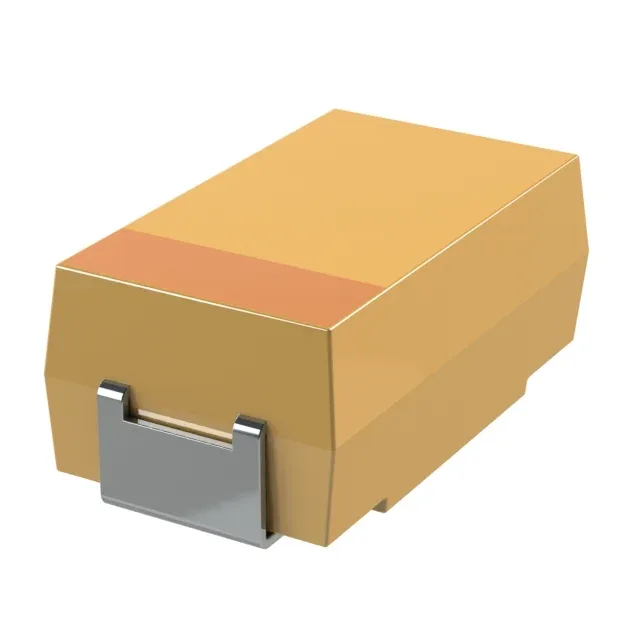
The TPSD686K020R0200: For a 12 V to 5 V buck converter output, this cap handles the bulk of the switching ripple, but the ESR means you still need a low-ESR ceramic in parallel for the high-frequency content above 1 MHz. The 2917 (7343 metric) case is the standard D-size tantalum chip footprint — same land pattern as the older TAJ D case, so it drops onto existing boards without a layout change. The seated height is 3.10 mm max, which fits under most low-profile heatsinks or enclosure lids.
Temperature range and derating
Rated for -55°C to 125°C, this cap covers the full military/industrial temperature band. At 125°C, the voltage derating rule for tantalum capacitors is 50% — so at 20 V rated, you should not exceed 10 V DC bias at the high end. The ESR also climbs with temperature; at 125°C, expect the 200 mOhm to roughly double, which further reduces the ripple current capability. The ±10% tolerance is standard for tantalum — the capacitance will measure between 61.2 µF and 74.8 µF at 25°C and 120 Hz. For a timing circuit, that spread matters; for bulk decoupling, it is fine.
No official pin-compatible second source is listed, but the 2917 D-case footprint is shared by multiple tantalum suppliers (Kemet, Vishay). If you need a drop-in alternative, look for a 68 µF, 20 V, D-case tantalum with similar ESR — just confirm the polarity marking orientation matches your board silk screen.