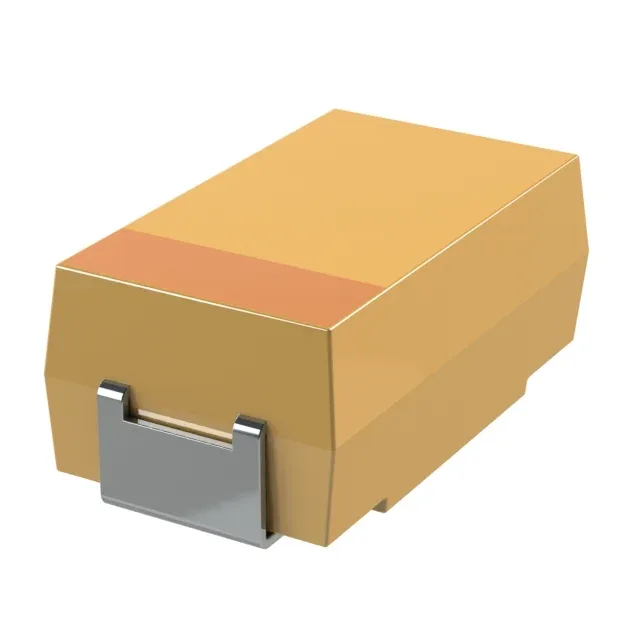
The TPSD106K035H0125: This is a 10 µF molded tantalum rated at 35 V with a 125 mOhm ESR — the three numbers that tell you whether it handles the ripple current on a 24 V bus without overheating. The 35 V rating gives 45 % derating on a 24 V rail, which is the standard practice for tantalum reliability; run a tantalum at less than 60 % of its rated voltage and the failure rate drops sharply. The 125 mOhm ESR is the number that matters for ripple current: at 100 kHz, a 125 mOhm ESR limits self-heating to about 0.5 °C per 100 mA of ripple, which keeps the part inside its thermal budget even in a tight layout. The 2917 case (7.30 mm × 4.30 mm, 3.10 mm seated height) is the standard D-size footprint — the same pad pattern used by most 7343 tantalum caps, so replacement is a direct swap.
You can order it for new designs and for ongoing production without worrying about a last-time-buy window.
Temperature range and board fit
Rated -55°C to +125°C — full military temperature grade. This cap is comfortable on a board that sees engine-bay heat or a cold-soak at altitude. The ±10 % tolerance is the standard for tantalum decoupling; if your rail needs tighter, you'd typically parallel two caps rather than hunt for a tighter bin. Surface-mount 2917 (7343 Metric) package — the footprint is the same as the industry-standard D-size tantalum. The 0.122-inch (3.10 mm) seated height fits under most low-profile enclosures. No special reflow profile beyond standard lead-free solder; the molded body handles 260 °C peak without issue.