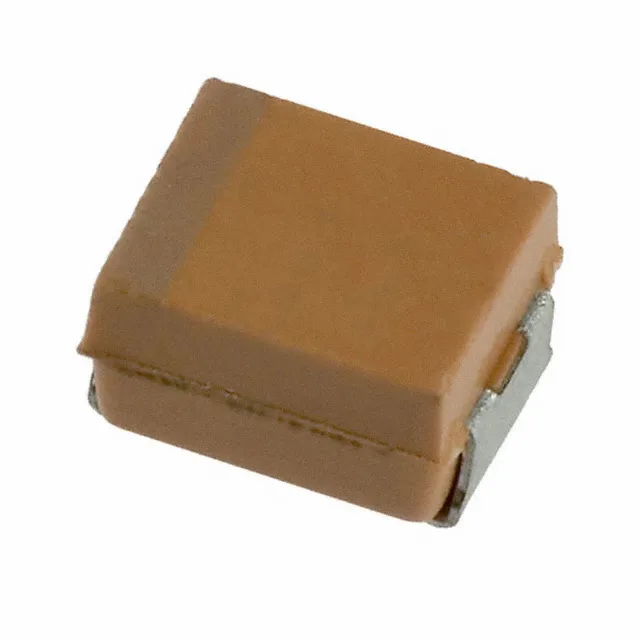
What the 4.7 µF / 10 V rating means for your BOM
The TAJB475M010H: This is a 4.7 µF tantalum capacitor rated at 10 V DC — the working voltage for a 3.3 V or 5 V rail with headroom. The ±20% tolerance means the actual capacitance can land between 3.76 µF and 5.64 µF; a regulator loop expecting exactly 4.7 µF may need a stability check if the output cap is the sole compensation element. The 4 Ohm ESR is the series resistance that limits ripple current and self-heating. For a 100 kHz buck converter output, the ripple current through this cap will be lower than through a low-ESR ceramic, but the self-heating stays within the 125°C rating if the RMS ripple is kept under 150 mA — check the thermal derating curve in the datasheet.
The cap can sit on an outdoor telecom board that sees -40°C overnight and 85°C in direct sun, or in an avionics LRU that cycles from cold-soak to engine heat. The molded case and tantalum construction hold capacitance across the range better than X5R/X7R ceramics, which lose 15-30% at the temperature extremes.
Case code B (1411 / 3528 Metric) — 3.50 mm x 2.80 mm footprint, seated height 2.10 mm max. The molded body has a clear polarity stripe on the positive end; rework is straightforward with a hot-air station if you pre-tin one pad and reflow the other side. The 1210 footprint is common enough that a standard pad layout serves both this and a ceramic replacement if you ever need to swap.