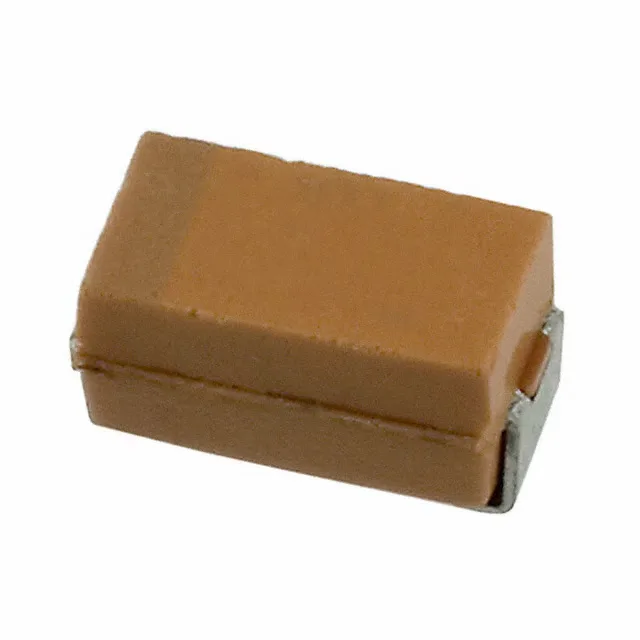
10 µF, 16 V — fits a 12 V rail with margin
The 16 V rating gives comfortable headroom on a 12 V supply rail — a 3.3 V or 5 V rail would be over-specified but still works. The ±10% tolerance is tight enough for most decoupling and bulk storage roles. The 3.20 mm x 1.60 mm body and 1.80 mm seated height fit well on dense boards where height is constrained.
3 Ohm ESR — watch the ripple current
It limits the ripple current the cap can handle before self-heating becomes an issue. For a 12 V input rail with a 100 mV ripple, the ripple current is about 33 mA — well within the part's capability. But if you need low impedance for a high-frequency decoupling, a ceramic or polymer cap in parallel is the usual fix. The 2000-hour endurance at 125°C is the standard rating for this series. In a 85°C ambient, the expected life stretches significantly — the 10°C halving rule applies. For a 105°C engine-bay application, the 2000-hour figure is the baseline; derate the voltage or add margin if the design life exceeds that.
At the cold end, capacitance drops slightly but the part still functions. At 125°C, the leakage current rises and the lifetime clock starts ticking — the 2000-hour rating is the limit at that temperature.
Sourced through independent distribution on a quoted-to-order basis.