What the clamping spec means on the bench
The 1.5SMCJ9.0C: 1.5 kW peak pulse power at 10/1000 µs means this is a line-level TVS — the kind of part that sits across a power rail or data bus and clamps the first spike that comes through. The 16.9 V maximum clamping voltage at 88.8 A peak pulse is the number that tells you whether the downstream IC survives the event. The 9 V reverse standoff is what the rail runs at normally without the diode conducting — it sits idle until the transient pushes it past the 10 V breakdown minimum.
Where it goes and how it mounts
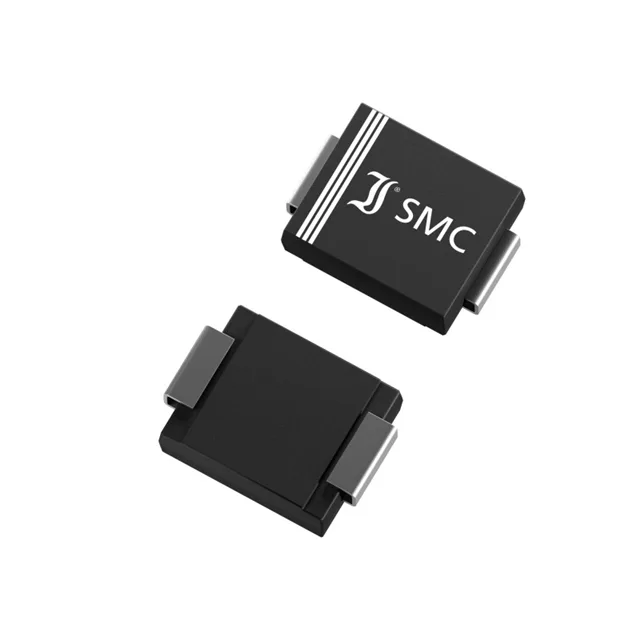
DO-214AB (SMC) package with surface-mount termination drops into the same footprint as the SMA but carries more peak pulse rating. The bidirectional channel means it does not care about polarity — lay it across an AC line, a differential bus, or a supply rail that can go either direction. Operating junction temperature runs to 150 °C, so it handles the thermal hangover after a clamping event without derating out of spec down to -50 °C ambient.
Active production — what sourcing looks like
Listed as active by Diotec Semiconductor. The SMC package is common across multiple TVS families from different manufacturers, so pin-compatible alternatives exist in the market — confirm the standoff and clamping ratings against your actual transient waveform before swapping.