What the 1.5SMCJ7.5CA protects and how
The 1.5SMCJ7.5CA is a bidirectional TVS diode — the "CA" suffix marks it as alternating-polarity, so it clamps positive transients above the standoff voltage and negative excursions below ground. One bidirectional channel covers the full differential fault window on a protected line. The 7.5V reverse standoff is the continuous working voltage the line can hold without the TVS conducting. The 8.3V minimum breakdown is where it begins to turn on under a rising transient. The 12.9V clamping voltage is what the downstream circuit sees during the peak pulse event — at 116A peak pulse current the clamp is held at that level, not allowed to rise further. For a 5V rail: 7.5V standoff gives comfortable headroom above the operating level, 8.3V breakdown sits above the rail so normal signals never trigger it, and 12.9V clamping is well below the typical 5.5V absolute-max of a microcontroller or Ethernet PHY. That is the correct TVS selection cascade — not just the wattage rating alone.
SMC package and temperature grade
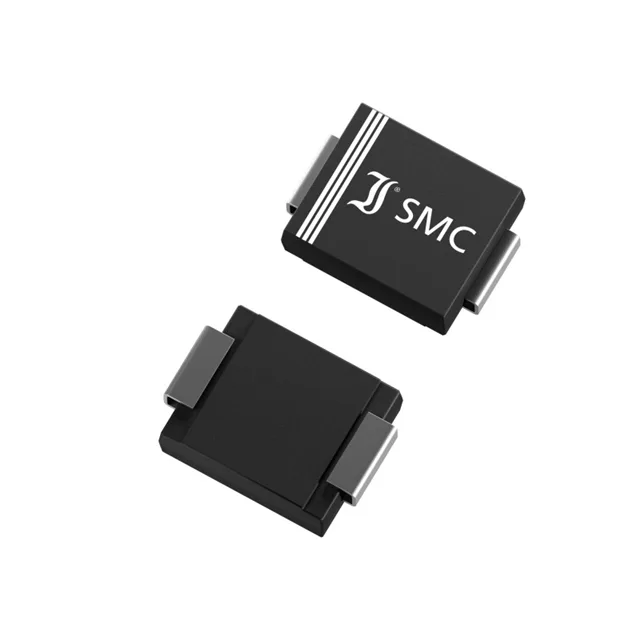
The DO-214AB (SMC) package is the most widely sourced TVS footprint in the industry — pin-compatible across multiple brands, so this is one of the easiest single-source-risk diodes to dual-source if the BOM demands it. Junction temperature range is -50°C to 150°C — this is an industrial-grade rating, not the commercial 0/70°C band. A panel in a non-climate-controlled enclosure that dips to -40°C on a cold start is still within the operating window. Diotec lists power-line protection as "No" — this part is intended for signal-line and component-level clamping, not for mains-supply protection modules. Match the application field to the rating.