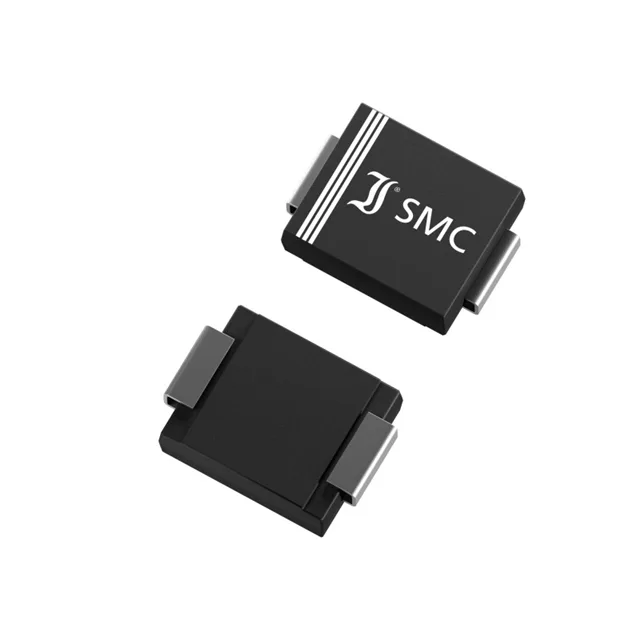
Diotec Semiconductor 1.5SMCJ60CA — Circuit Protection

Diotec 1.5SMCJ60CA TVS Diode, 60V standoff, 1.5kW peak

MPN1.5SMCJ60CA
Active

Diotec Semiconductor Zener TVS diode, 1.5SMCJ60CA, DO-214AB (SMC), 60V reverse standoff, 66.7V breakdown, 96.8V clamping @ 15.5A, 1500W peak pulse (10/1000 µs), bidirectional, -50°C to 150°C junction, surface mount, strip.

$0.8068Ref. price · indicative, final on quote
Independent supplier — new & surplus stockAuthenticity-screened · ESD-safe packingListing updated Aug 2026

Specifications

1.5SMCJ60CA specifications
ParameterValue
TypeZener
MountingSurface Mount
Voltage - breakdown66.7V
Voltage - clamping (Max) @ ipp96.8V
Voltage - reverse standoff60V
Current - peak pulse (10/1000μs)15.5A
Power - peak pulse1500W (1.5kW)
Power line protectionNo
Operating temperature-50°C~150°C(TJ)
PackageStrip
ApplicationsGeneral Purpose
CaseDO-214AB, SMC
Bidirectional channels1

Product details

What the three voltage ratings mean together

The 1.5SMCJ60CA: The 60V reverse standoff is the working voltage — the circuit runs below this in normal operation. That 96.8V clamping ceiling is what the protected load actually sees during a fault event — not 96.8V applied continuously, but a short-duration clamp that the downstream semiconductor must survive for the duration of the transient waveform.

Temperature and the 150°C junction ceiling

Rated to 150°C junction temperature — the -50°C lower bound covers outdoor and industrial cold-start environments without condensation risk if the board is sealed. The thermal derating curve in the datasheet governs how much of the 1.5 kW rating remains usable above 25°C ambient.

DO-214AB (SMC) package and what it means for assembly

Surface-mount SMC body — the cathode band marks polarity on the unidirectional part, so orientation is unambiguous before reflow. Strip packaging suggests cut-tape or loose parts; confirm reel availability if you are specifying for automated assembly.

Frequently asked questions

What is the 1.5SMCJ60CA used for?

As a unidirectional Zener TVS, it clamps voltage transients on signal and low-power distribution lines — protecting downstream ICs and control circuits from spikes above 66.7V.

What is the difference between standoff voltage and clamping voltage on this part?

The 60V standoff is the maximum working voltage the circuit runs at without the TVS activating. At 66.7V the device breaks down, and during the transient event it clamps at 96.8V — that is the voltage the protected load is exposed to during the fault window.