Standoff and clamping — what the voltage ratings mean
The 1.5SMCJ58CA: The 58 V reverse standoff is the working voltage — the TVS does not conduct here, so this is the primary selection axis when protecting a 48 V rail or similar. Choose a standoff at or above the normal operating peak. The 64.4 V minimum breakdown marks where the device begins conducting in the reverse direction; during a clamped event the maximum clamping voltage is 93.6 V at the rated 16 A peak pulse current — that 1.5 kW peak pulse power rating follows directly from their product.
Peak pulse handling at the standard 10/1000 µs waveform
This is the event the clamping voltage spec is tied to; a longer or higher-energy surge will produce a higher clamping voltage before the diode's junction heats past its 150 °C limit.
Junction temperature and thermal margin
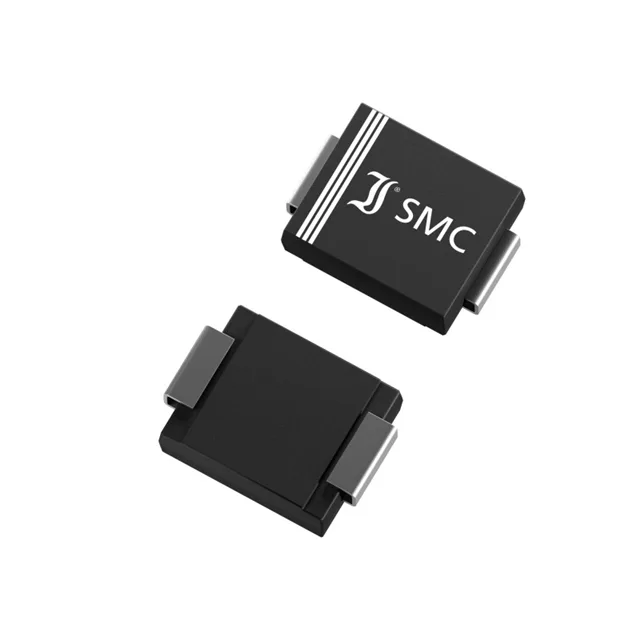
The 150 °C maximum junction temperature gives decent derating headroom for most industrial and outdoor enclosures — run the part well below that in normal service and the clamping characteristic stays predictable during a surge event. SMC/DO-214AB is the standard pick-and-place footprint for 1.5 kW TVS diodes — the thermal pad under the body conducts heat to the PCB; layout copper under and around it reduces thermal resistance from junction to ambient.