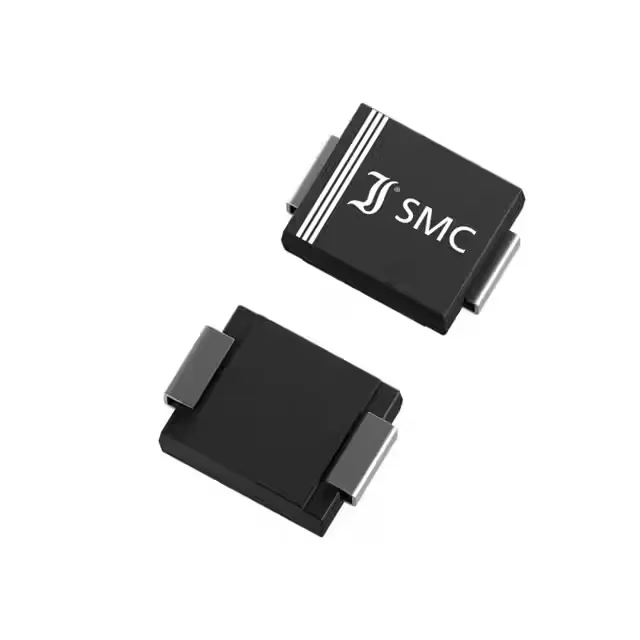
What the clamping spec means for automotive transient protection
The 1.5SMCJ58A-AQ: At 16A peak pulse current the clamping voltage tops out at 93.6V — that is the ceiling the downstream circuitry sees during a load-dump event, so the protected rail must tolerate a brief 93.6V spike without exceeding its own abs-max. The 58V reverse standoff rating sets the continuous working voltage below which the device stays off and leaks only nuisance current; it sits in the off state during normal 12V automotive rail operation, waking only when the transient exceeds the breakdown threshold of 64.4V minimum.
Automotive temperature grade and thermal margin
Junction temperature range is -50°C to 150°C — the upper bound is the key rating for under-hood and engine-bay deployments where ambient can hit 125°C+; a 1500W transient spike raises junction temperature sharply during the event, so thermal impedance from junction to ambient on the PCB pad matters for survivability. The strip packaging designation means the part ships non-reeled for kitting workflows common in EMS — verify whether your line expects reeled tape-and-reel before kitting, since the SMC body is tape-capable but the default listing may be cut-tape or bulk.
Sourcing and lifecycle posture
Single-source from Diotec in this exact order code; if your BOM demands a second-source hedge, the TVS zener function and DO-214AB footprint are industry-standard across multiple brands, but a parametric cross-check at the clamping/breakdown/standoff ratings is required before committing — a nominally equivalent part with a different nominal standoff voltage will shift the protection window.