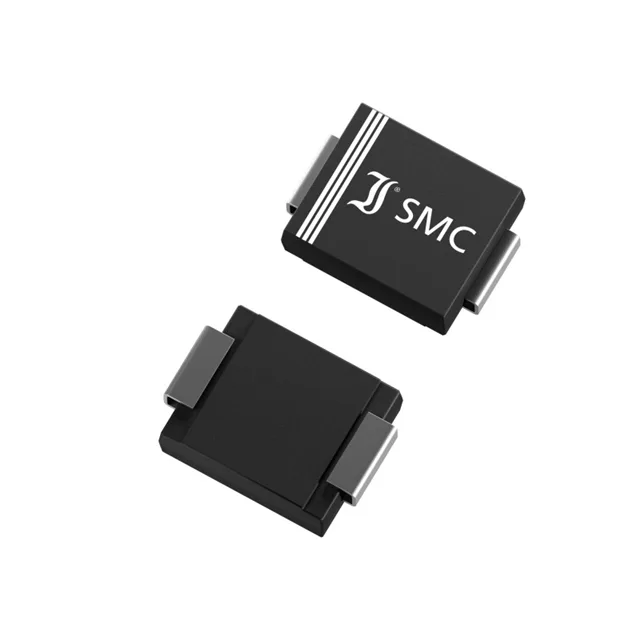
Diotec Semiconductor 1.5SMCJ54 — Circuit Protection

Diotec 1.5SMCJ54 TVS Diode, 54V Standoff, 1500W

MPN1.5SMCJ54
Active

Diotec Semiconductor 1.5SMCJ54, unidirectional Zener TVS diode, 54V standoff, 1500W peak pulse, 96.3V clamping @ 15.6A, DO-214AB SMC, surface mount, strip.

$0.8704Ref. price · indicative, final on quote
Independent supplier — new & surplus stockAuthenticity-screened · ESD-safe packingListing updated Aug 2026

Specifications

1.5SMCJ54 specifications
ParameterValue
TypeZener
MountingSurface Mount
Voltage - breakdown60V
Voltage - clamping (Max) @ ipp96.3V
Voltage - reverse standoff54V
Current - peak pulse (10/1000μs)15.6A
Power - peak pulse1500W (1.5kW)
Power line protectionNo
Operating temperature-50°C~150°C(TJ)
PackageStrip
ApplicationsGeneral Purpose
CaseDO-214AB, SMC
Unidirectional channels1

Product details

1500W peak pulse and 54V standoff — the protection envelope

The 1.5SMCJ54: With a 54V reverse standoff typ, it sits cleanly above a 48V nominal rail while leaving enough margin before the 60V minimum breakdown threshold to avoid leakage in normal operation. The 15.6A peak pulse current rating tells you the surge current the device survives once the transient crosses into breakdown — the clamping voltage at that current is 96.3V, which is what your downstream IC actually sees during the event.

Clamping voltage and the downstream circuit

At 15.6A peak pulse, the clamping voltage climbs to 96.3V — about 1.78× the standoff. That ratio matters for sensitive downstream semiconductors: a 5V logic rail protected by this part sees a 96.3V spike before the TVS clamps, which may exceed the absolute maximum of some fetches. For 48V automotive or industrial rails the headroom is tighter, and 96.3V at surge current is within most 80V-rated load-dump clamping windows. Confirm the downstream absolute-max before committing the standoff voltage alone — the clamping ratio is the real design check.

Operating temperature and package

The DO-214AB SMC package is the standard J-lead for this power class — the cathode bar on the package marks polarity, and the unidirectional designation means the anode is the protected node. Confirm the circuit direction before layout; a reversed polarity connection puts the TVS in forward conduction rather than breakdown clamping.

Frequently asked questions

What is the difference between a unidirectional and bidirectional TVS, and does that matter for my design?

A unidirectional TVS (which the 1.5SMCJ54 is) clamps positive transients in one direction only — it behaves like a Zener in reverse breakdown during the surge event and blocks normally in the forward direction. A bidirectional TVS clamps in both polarities. If your circuit sees only positive-going transients on a single-polarity power rail, the unidirectional part is the right fit; if the line floats or sees bipolar events, you need the bidirectional variant from the same series.