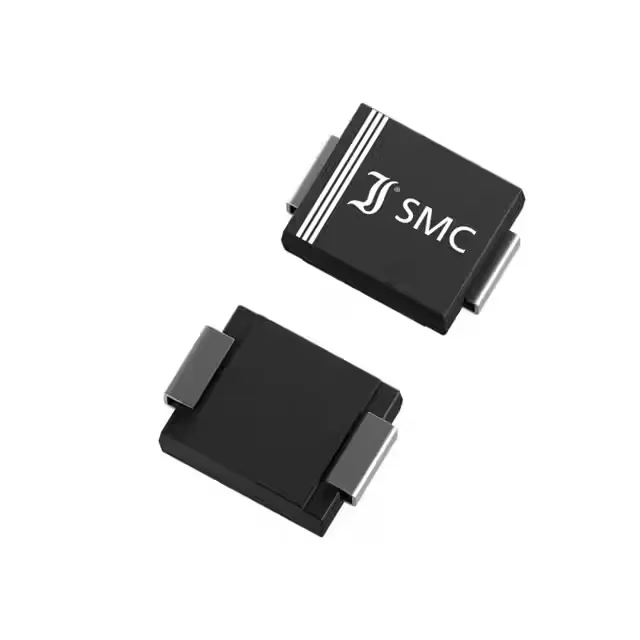
What the 1.5SMCJ5.0CA is
Surface-mount termination means it reflows or hand-places on the board alongside the rail it protects, with a clamping action that fires when a surge exceeds the standoff voltage. The 5V reverse standoff means the circuit runs normally below that level; the 9.2V clamping ceiling is what the downstream load sees during a transient event. The 163A peak pulse current rating (10/1000 µs waveform) tells you it handles the high-current edge of a surge without going short — critical for USB, Ethernet, or sensor lines where the protectee cannot tolerate extended overvoltage.
The reverse standoff of 5 V sets the normal operating ceiling — the TVS stays off and draws only leakage current until the transient pushes the line above that level. The minimum breakdown of 6.4 V is the firing threshold; once exceeded, the device avalanches and clamps. The maximum clamping voltage of 9.2 V at 163 A peak pulse current is the number that decides whether your downstream IC survives — it is the voltage present at the load during the event, not a theoretical ceiling. Power line protection is flagged as No — this part is not a mains-rated TVS but a general-purpose clamping device for signal and lower-voltage power rails.
Sourcing posture
Listed Active by Diotec Semiconductor.