Clamping performance and peak-pulse rating
The 1.5SMCJ5.0: Rated 1500 W peak pulse (10/1000 µs waveform) — this is the transient energy the diode safely absorbs when a surge fires into the clamp. The 146 A peak pulse current figure tells you the current the clamping circuit must commutate at the specified wave shape; a longer-duration or higher-energy surge derates this number per the IV characteristic curve. Reverse standoff is 5 V typ, meaning the protected rail operates at up to 5 V without the TVS drawing significant leakage — the circuit sees an open circuit below this threshold. Minimum breakdown sits at 6.4 V; once the transient pushes the node above that, the Zener Avalanche mechanism turns on and clamps the overvoltage. Maximum clamping voltage is 10.3 V at peak pulse current — this is what the downstream IC or bus sees if the surge exceeds the standoff and the TVS activates. Choosing a standoff voltage close to the working rail minimizes the overshoot the protected load endures, but leaves less margin before the TVS starts conducting leakage.
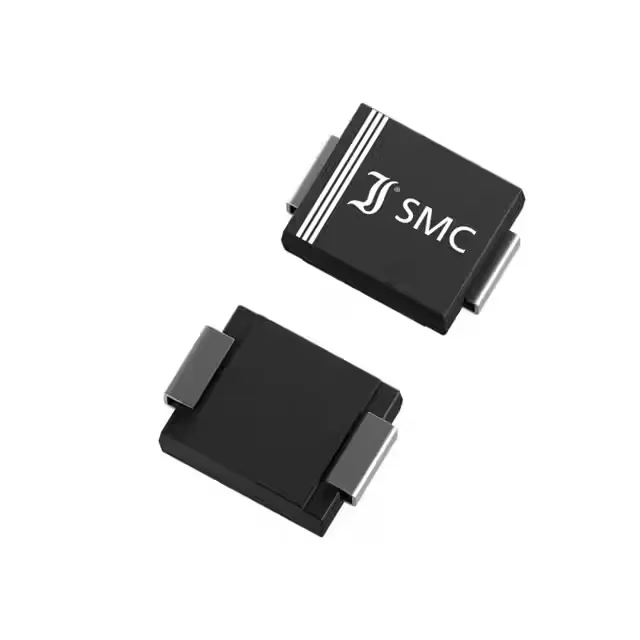
Surface-mount DO-214AB (SMC) package with the standard three-terminal foot pattern — the cathode bar connects to the protected rail, anode to ground. Operating junction temperature range is -50 °C to 150 °C — this covers industrial and outdoor environments, but the Tj rating is calculated from ambient plus the self-heating contribution during a clamping event. A sustained or repeated surge that keeps the diode in conduction will push Tj higher than the same event in free air, so thermal design matters for repetitive-surge applications.
The part is offered in strip packaging; full reel availability and lead times are confirmed at RFQ.