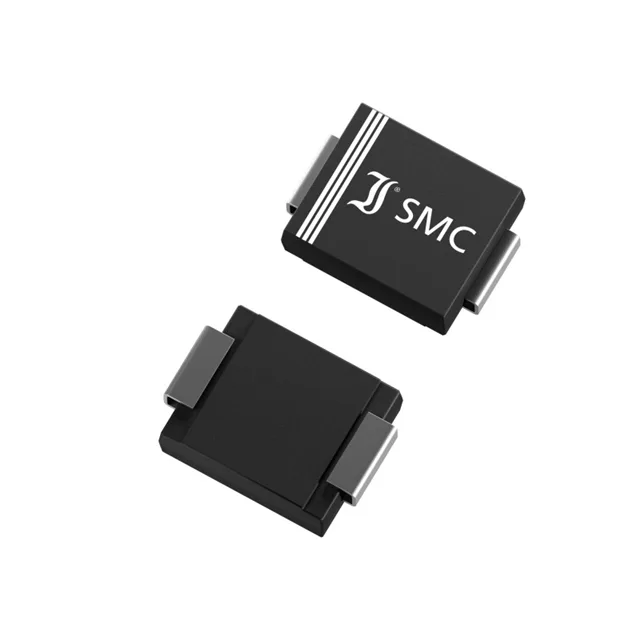
Diotec Semiconductor 1.5SMCJ40A — Circuit Protection

1.5SMCJ40A TVS Diode, 40V Standoff, 1.5kW Peak

MPN1.5SMCJ40A
Active

Diotec Semiconductor Zener TVS diode, 1.5SMCJ40A, 40V reverse standoff, 64.5V clamping, 23.3A peak pulse, 1.5kW peak power, -50°C to 150°C junction, DO-214AB SMC surface mount.

$0.9158Ref. price · indicative, final on quote
Sourced new & surplus through independent channelsAuthenticity-screened · ESD-safe packingListing updated Aug 2026

Specifications

1.5SMCJ40A specifications
ParameterValue
TypeZener
MountingSurface Mount
Voltage - breakdown44.4V
Voltage - clamping (Max) @ ipp64.5V
Voltage - reverse standoff40V
Current - peak pulse (10/1000μs)23.3A
Power - peak pulse1500W (1.5kW)
Power line protectionNo
Operating temperature-50°C~150°C(TJ)
PackageStrip
ApplicationsGeneral Purpose
CaseDO-214AB, SMC
Unidirectional channels1

Product details

Standoff, clamping, and surge handling

The 1.5SMCJ40A is a unidirectional TVS diode — a Zener-based clamp that diverts surge current away from a protected load when the line voltage exceeds the standoff threshold.

Thermal margin in the clamp path

For a board running in a sealed enclosure at 85°C ambient, the available thermal delta to the 150°C max is 65°C, which constrains how long and how often the diode can absorb repetitive surges before derating is required.

DO-214AB SMC — what the package means for the layout

The SMC (DO-214AB) package is the mid-size TVS footprint — larger than the SMA (DO-214AC) and smaller than the SMCG — with a typical land pattern of 3.3 mm body width and 1.5 mm standoff height above the board. The strip packaging designation means it ships cut-tape or reel depending on the order quantity; confirm the exact reel option at order time since the two have different tape widths and the pick-and-place feeder requirements differ.

Frequently asked questions

What standoff voltage class is the 1.5SMCJ40A, and what does it protect?

The 40 V reverse standoff voltage puts this in the class suited for 24 V industrial control buses, CAN/LIN node protection, and general-purpose overvoltage clamping on supply rails that see transients above the nominal operating voltage. The unidirectional configuration means it clamps positive surges only — it does not provide bidirectional bipolar protection.