What 1.5SMCJ36CA-AQ clamping specs mean for the circuit
The three voltage ratings on a TVS Zener form a hierarchy that drives every selection decision. The reverse standoff of 36V is where the device sits idle in normal operation — the supply rail it is protecting must sit comfortably below this so the diode never conducts in the quiescent state.
This is a 1 ms total event, which means the diode absorbs 1.5 kJ of energy in that window — enough to survive the load-dump and surge transients defined in ISO 7637-2 when sized correctly. The 25.8A peak pulse current rating at this waveform is the clamping current the diode delivers at the voltage clamp ceiling — the lower the clamping voltage relative to the peak surge current, the less energy the downstream IC sees.
Junction temperature and automotive deployment
Junction temperature — not ambient — is the constraint that matters for thermal derating: a TVS mounted in a confined harness splice or near a heat source will run hotter than the ambient temperature in the bay, so the 150°C TJ ceiling sets the derating floor for the clamping performance over lifetime.
Package, mounting, and second-source reality
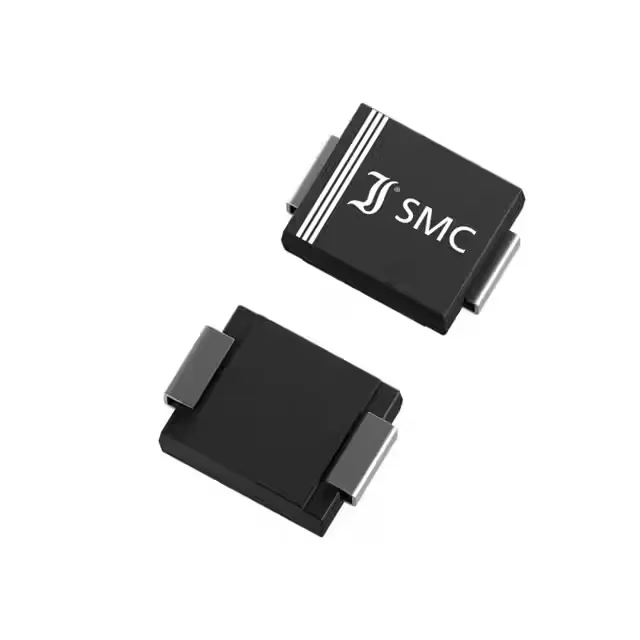
The DO-214AB (SMC) package is the standard industry footprint for 1.5 kW bidirectional TVS diodes — it is pin-compatible across second-source manufacturers sourcing the same case code. Surface-mount termination means it reflow-solders onto the PCB — the cathode stripe on the body must be oriented correctly for unidirectional polarity, but the bidirectional variant clamps either polarity without orientation concern.