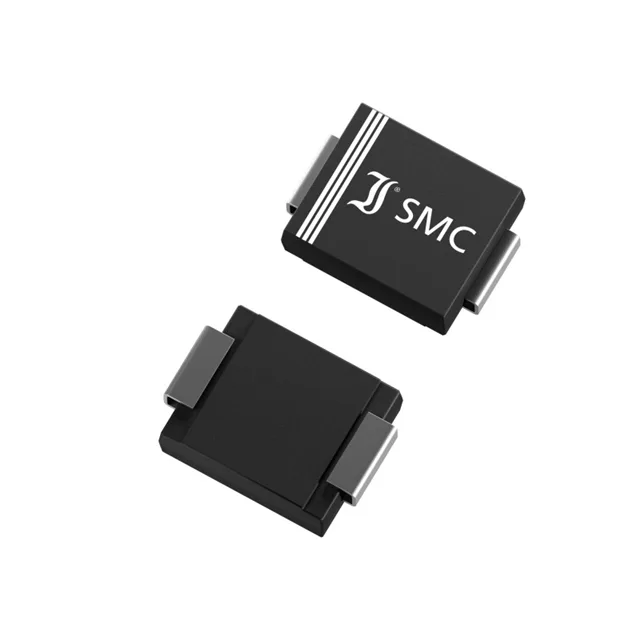
1.5kW peak-pulse TVS in DO-214AB
The 1.5SMCJ33A: The 1500 W figure sets the surge-withstand ceiling: it handles the energy from a real fast-transient event (inductor kick, switching surge, ESD hit) without degrading the Zener junction, so it clamps the line before the downstream circuitry sees damage. The DO-214AB package is the workhorse SMC outline — widely available, reflow-compatible, and well-suited to single-side or dual-side board assembly.
Clamping voltage and standoff — what the numbers mean
Reverse standoff is 33 V typ — the TVS sits idle below this and does not conduct in normal operation. The clamping voltage at peak pulse current is 53.3 V max — that 20.3 V differential above standoff is the let-through the downstream IC must survive. The tighter the standoff-to-clamping gap, the better the protection; for a 24 V rail, a 33 V standoff gives roughly 2× headroom during normal operation and clamps under 60 V during a surge event. A 1 kA event or a long-tail inductive spike will exceed this device's capability and push it into secondary breakdown. Match the surge environment (IEC 61000-4-2 ESD, inductive load dump, motor start) to this rating before committing it to the BOM.
Temperature grade and thermal margin
TJ max is 150 °C, with an operating range down to -50 °C — the wide temperature band covers industrial outdoor and instrumentation environments where the board ambient swings. The SMC leadframe and die attach carry the transient thermal spike during the 10/1000 µs pulse; repeated pulses above the rated peak pulse energy will accumulate junction temperature. Verify the duty cycle in the application against the derating curve in the Diotec datasheet if the board sees recurrent transients.