What this part is and what the ratings mean
The 1.5SMCJ30CA-AQ: This is a bidirectional Zener-based TVS diode — the 1.5SMCJ suffix marks it as a unidirectional polarity TVS in the 1.5 kW peak-pulse class. That 18.4V differential (48.4 minus 30) is the transient headroom the device absorbs before it limits. The 31A peak pulse rating (10/1000 µs waveform) defines the surge current the diode survives without degradation — the 1.5 kW rating at that pulse width is the thermal ceiling for a single-event transient, not a continuous power rating. A longer-duration or higher-current surge trips the clamping ceiling faster because the I²R heating in the junction scales with the square of the pulse current.
Automotive fit — the -AQ grade matters here
The -AQ suffix is Diotec's automotive qualification marker — operating temperature is rated to 150°C junction, which puts this squarely in the under-hood thermal band. A 12V automotive rail can see load-dump transients well above the 30V standoff; the TVS clamps those transients and protects the ECU input stage from ISO 7637-2 style surge events. At -50°C minimum junction temperature, the diode also survives cold-start conditions — a discharged battery at -20°C still delivers a stiff 12V rail, but wiring harness inductance can produce negative spikes during disconnection that the TVS must clamp without latch-up.
Package, mounting, and board fit
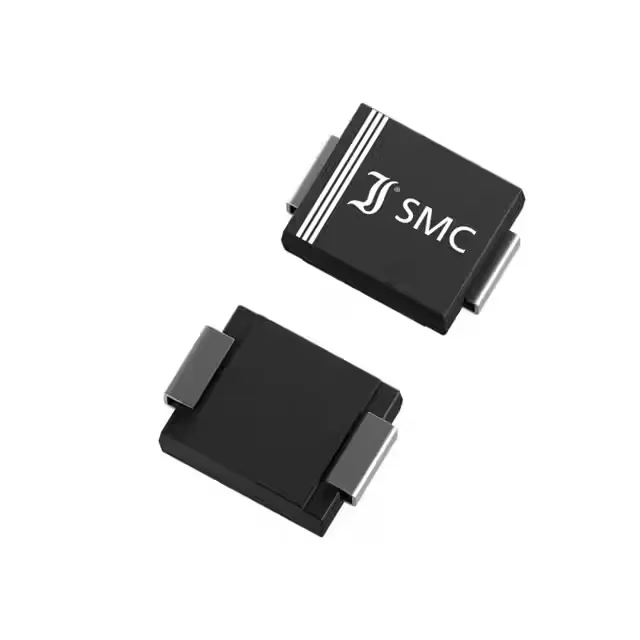
DO-214AB (SMC) is the standard industry footprint — the land pattern is universal across 1.5SMCJ-family parts, so swapping to a different standoff voltage or a second-source 1.5SMCJ30C variant requires no board spin. Solder joint thermal cycling is the failure mechanism to watch on automotive boards; the junction-to-lead thermal resistance governs how quickly the die reaches equilibrium under repeated pulse loading. Surface-mount on a strip pack — the DO-214AB package is pick-and-place compatible with standard SMT lines, and the wide lead-free plating on the termination tabs handles reflow profiles to 260°C peak.