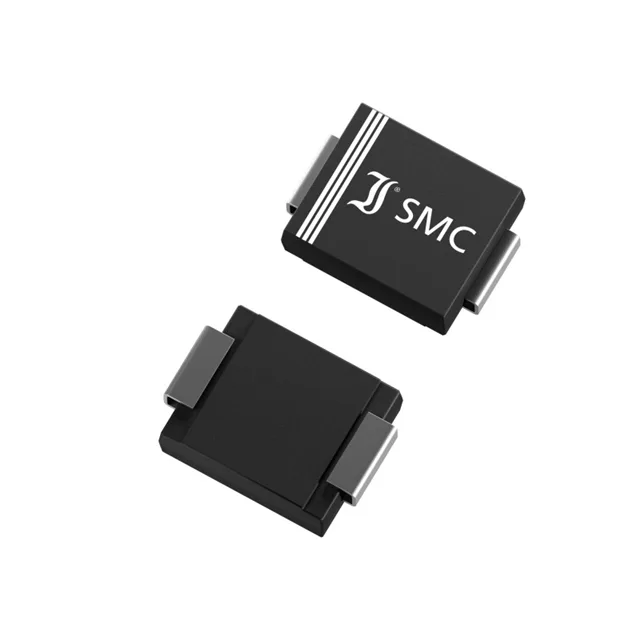
The 1.5SMCJ30C: The part dissipates 1500 W during the 10/1000 µs transients it is rated for, clamping the voltage at 53.5 V maximum at a peak pulse current of 28 A. For a 24 V nominal rail, that 53.5 V ceiling is well above the standoff of 30 V but comfortably below the breakdown minimum of 33.3 V — the TVS stays invisible during normal operation and turns on hard only when the surge arrives. The 28 A rating tells you it handles the first-port-of-call surge current before upstream protection has to clear; on a bus that already has an upstream breaker, this device buys the time window the breaker needs to trip without letting the clamping voltage stress the load.
Stand-off, breakdown, clamping — the TVS operating window
30 V reverse standoff is the maximum working voltage the protected rail can run at continuously without the TVS conducting. This three-point window — standoff, breakdown, clamping — is the sizing decision: pick a standoff above the nominal rail plus typical tolerance headroom, and verify the clamping voltage is within the transient-withstand rating of whatever is behind it.
DO-214AB SMC package — surface-mount transient protection
SMC (DO-214AB) is the mid-size surface-mount package for TVS diodes — one size above the SMA and one below the SMB. The wide metal slug on the bottom carries heat away from the junction during the pulse; the typical PCB pad calls for a minimum of 3 mm x 5 mm land with a central thermal relief. Because the TVS is a clamping device that conducts briefly during a fault, the PCB trace width feeding the device should be sized for the full fault current, not just the normal operating current.
150°C junction temperature rating
The maximum junction rating is 150°C with an operating range down to -50°C, which covers industrial and outdoor environments where cold-cranking transients and thermal cycling are both in play.