Unidirectional TVS clamping at 28 V standoff
The 1.5SMCJ28A: When triggered, the clamping ceiling is 45.4 V at the 33 A peak pulse current on a 10/1000 µs waveform — so downstream circuitry sees no more than 45.4 V during the surge event.
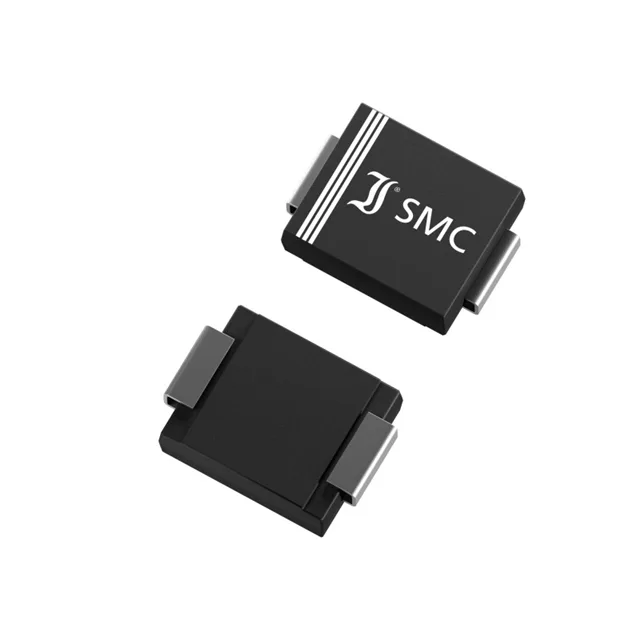
Diotec Semiconductor 1.5SMCJ28A unidirectional TVS diode, 1500W peak pulse, 28V reverse standoff, 31.1V min breakdown, 45.4V max clamping @ 33A, DO-214AB SMC package, surface mount.
| Parameter | Value |
|---|---|
| Type | Zener |
| Mounting | Surface Mount |
| Voltage - breakdown | 31.1V |
| Voltage - clamping (Max) @ ipp | 45.4V |
| Voltage - reverse standoff | 28V |
| Current - peak pulse (10/1000μs) | 33A |
| Power - peak pulse | 1500W (1.5kW) |
| Power line protection | No |
| Operating temperature | -50°C~150°C(TJ) |
| Package | Strip |
| Applications | General Purpose |
| Case | DO-214AB, SMC |
| Unidirectional channels | 1 |
The 1.5SMCJ28A: When triggered, the clamping ceiling is 45.4 V at the 33 A peak pulse current on a 10/1000 µs waveform — so downstream circuitry sees no more than 45.4 V during the surge event.
The 28 V standoff is the maximum working voltage the line can sit at continuously without the TVS conducting; the 31.1 V minimum breakdown is the threshold where it starts to clamp. Once a transient exceeds that threshold, the 45.4 V maximum clamping voltage at 33 A peak pulse is what the protected load actually sees during the event — lower clamping voltage means less stress on the downstream IC.