What 26V standoff means for the clamp decision
The 1.5SMCJ26 is a unidirectional Zener-type TVS diode — it sits idle above 26V reverse standoff, then switches into conduction once the transient pushes the line above 28.9V minimum breakdown. At that point it clamps the voltage to a maximum of 46.6V at the 32.2A peak pulse rating, protecting whatever runs downstream of it. The 26V standoff figure is the selection anchor: the protected rail must operate below it under normal conditions so the TVS stays silent until a surge arrives. Faster, sharper transients (ESD human-body model at <100 ns) carry less energy and stay within the diode's repetitive peak capability; slower, higher-energy surges (lightning or inductive kick) consume more of that 1500W margin and drive the clamping voltage up the IV curve.
DO-214AB SMC — footprint and sourcing reach
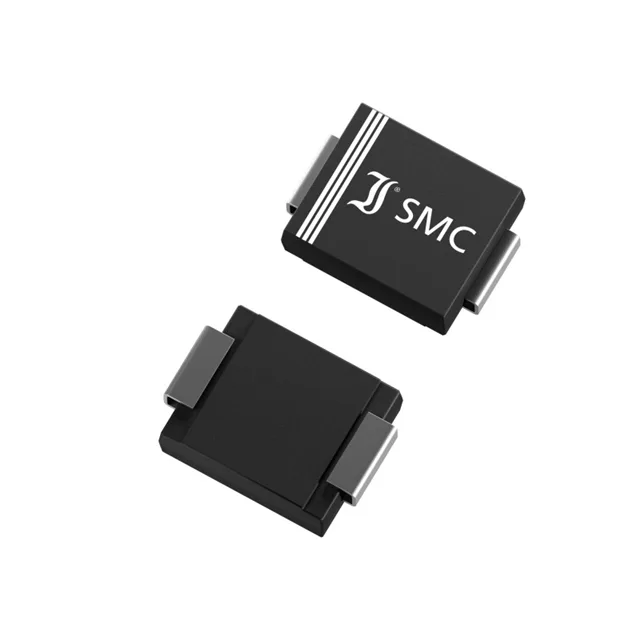
The SMC (DO-214AB) package is the standard industry footprint for 1.5kW TVS families across multiple manufacturers. The cathode band marks the polarity — unidirectional only, so one direction of surge is protected. The strip packaging format is typical for OEM reel orders; quantities and lead time are confirmed against the RFQ. Operating junction temperature runs from -50°C to 150°C — the upper bound is the thermal trip point for the clamping junction. In a confined enclosure with poor thermal coupling to the PCB pad, the peak pulse duty cycle matters: the diode absorbs transient energy and self-heats; repeated pulses without sufficient recovery time push Tj toward the 150°C ceiling. Board-level thermal relief through the cathode tab is the expected design path.