What the standoff and clamp pair mean for your protection circuit
The 1.5SMCJ24CA-AQ: The standoff voltage of 24 V sets the continuous working plane; the part idles below the breakdown threshold during normal operation and stays transparent to the rail. That 14.9 V differential between standoff and clamp defines the let-through voltage your downstream circuits see — the tighter it is, the less margin your protected node needs.
Peak pulse rating and what 1.5 kW means for automotive loads
A 24 V automotive rail sees load-dump transients that can reach 40–100 V open-circuit; the TVS absorbs that energy and clamps before the downstream ECU rail collapses. The 38.6 A peak current rating tells you the device can survive the current path through its clamping impedance at the surge level without going into thermal runaway. Junction temperature rating runs to 150 °C — the upper end of the automotive under-hood band. At full surge absorption the die temperature spikes well above ambient; a 150 °C Tj ceiling gives thermal headroom that a commercial-grade 125 °C part would not have in the same application. This is the key selection axis for engine-bay protection versus interior equipment.
Package and sourcing posture
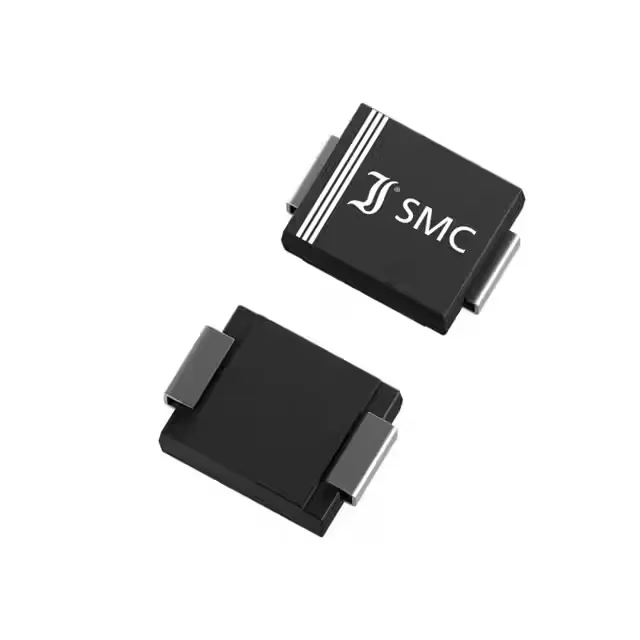
The DO-214AB (SMC) footprint is the most common automotive TVS package — the cathode band orientation on the sleeve tells you polarity at a glance before the board lands. Strip packaging is standard for this automotive-grade part; the unit quantity and lead format on the strip match feeder-ready kitting for EMS line-feed, but confirm the strip length and bobbin orientation against your pick-and-place tooling before committing to a reel conversion. Diotec Semiconductor lists the part as Active. No official successor or second-source cross-reference is listed; the Diotec 1.5SMCJ24CA-AQ is the direct order-code match for this position.