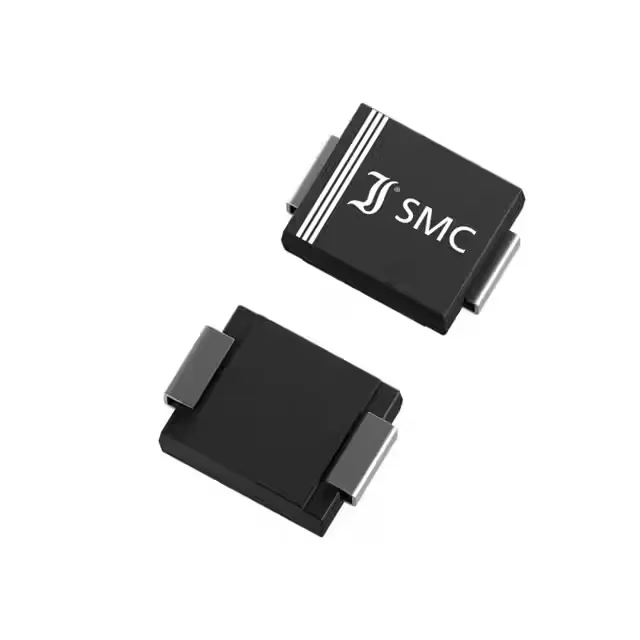
The 1.5SMCJ24A-AQ clamps a 10/1000 µs surge at 38.9 V maximum, letting 38.6 A flow through the device during the event without degradation. At 1.5 kW peak pulse capacity, this is the transient energy the package absorbs — a single-shot event rating, not a continuous dissipation figure. For a 12 V automotive rail, a load-dump spike that drives the line above 26.7 V breakdown triggers the TVS, clamping the overvoltage at the board trace before it reaches downstream ICs.
24 V standoff sets the normal operating window
Reverse standoff of 24 V means the TVS idles below its breakdown knee during normal operation — it leaks only a few microamps at 24 V and presents a high impedance to the protected rail. The 2.7 V margin between 24 V standoff and the 26.7 V minimum breakdown gives headroom above the nominal rail before the clamping leg activates. Automotive 12 V systems run at 13.5–14.4 V charging; the 24 V standoff accommodates those peaks without activation.
Automotive temperature grade and SMT handling
The DO-214AB (SMC) package is the standard SMB footprint — the cathode band marks pin 1 for polarity orientation. The thermal pad under the body is the anode; PCB layout should pour copper around the pad for RthJC better than 15 °C/W. Reflow profile follows standard lead-free Sn/Ag/Cu solder paste; a pre-bake at 125 °C for 4 h is recommended if the part has been stored unpackaged in humidity above 85 % RH.