What the clamping specs mean for your protection circuit
The 1.5SMCJ22A clamps the line to 35.5 V maximum at a 42.3 A peak pulse current using the 10/1000 µs waveform convention — that 35.5 V ceiling is what the downstream IC or bus sees during a transient event, so the downstream rail headroom must be rated above it. With 1500 W peak pulse power rating in the DO-214AB package, the diode handles the surge energy without relying on a separate heatsink — the SMC package tab carries the thermal path to the board copper. Reverse standoff is 22 V typical; breakdown minimum is 24.4 V — the diode stays invisible in normal operation and transitions into avalanche conduction only once the transient exceeds the standoff threshold.
Package and thermal integration
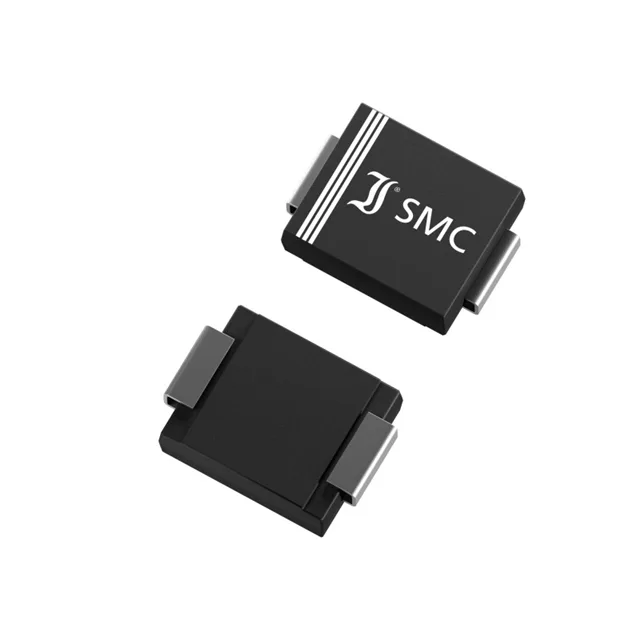
The SMC (DO-214AB) package is the mid-range TVS footprint — larger than SOD-323 but more compact than R-6/puck packages — which makes it the standard pick for board-level protection on 24 V industrial bus rails. Junction temperature rating is -50°C to 150°C, so the part tolerates the thermal cycling seen in enclosed panels without derating the clamping performance — the -50°C cold side matters for outdoor or cold-start conditions. This is a unidirectional device with one active channel — it protects a single polarity rail. For AC or bipolar rails a bidirectional variant from the same 1.5SMCJ series would be needed.
Sourcing posture
Use accordingly for the right fault domain.