What a 1500W TVS Zener actually protects
The 1.5SMCJ20CA-AQ is a unidirectional-bidirectional TVS Zener diode from Diotec Semiconductor — the bidirectional polarity code (CA suffix) means it clamps both polarities, which makes it the right fit for AC rails or any node where the line can swing past ground.
The three voltage numbers that drive TVS selection
Reverse standoff voltage of 20 V defines the continuous working voltage the diode sees without conducting — the protected rail can sit at 20 V indefinitely without the TVS loading it. Minimum breakdown of 22.2 V is the threshold where the device begins to conduct — below this the TVS is invisible to the circuit; above it the clamp takes over. The 2.2 V margin between standoff and breakdown gives the line room to breathe before the protection activates. Maximum clamping voltage of 32.4 V at the rated 46.3 A peak pulse is the number that protects downstream ICs — the downstream circuit must survive 32.4 V for the brief duration of the event, so downstream abs-max ratings must be specified above this ceiling.
Automotive temperature grade and SMT form factor
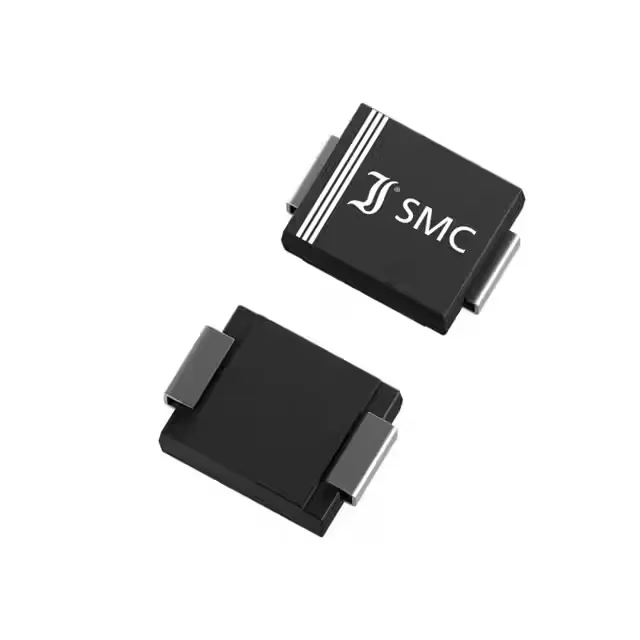
Junction temperature rated from -50°C to 150°C — this bracket covers engine-bay and chassis environments where ambient can dip below freezing and spike above 100 °C. The 150 °C ceiling is the critical figure for derating calculations; a TVS running near Tj-max in a sealed enclosure needs thermal headroom. DO-214AB (SMC) package with surface-mount termination — the wide copper pad under the body is the thermal path to the board; adequate landing pad copper and thermal vias under the cathode tab are required to hit the rated peak pulse capability. Solder-mask defined pads are standard for this footprint. Automotive application rating means the diode is characterised for the specific failure-mode and temperature requirements of vehicle electronics — not just a commercial part relabelled, but built for the automotive reliability profile.