What 1500W peak pulse and 17V standoff mean for the BOM
The 1.5SMCJ17C clamps at 30.5V maximum under a 49.2A peak pulse (10/1000 µs waveform), which is the voltage the downstream circuit actually sees when a transient arrives — the 17V standoff rating is the working voltage the diode ignores under normal conditions. 1500W peak pulse is the 1.5SMCJ designation point at the standard 10/1000 µs surge waveform. It tells you the diode absorbs and diverts transient energy to ground before it reaches the protected rail — a short event that the diode survives because it is not in continuous conduction.
Unidirectional polarity and Zener-type clamping
This is a single-channel, unidirectional TVS — the polarity notch or stripe on the SMC package marks the cathode, and the diode conducts only when the cathode goes above the breakdown threshold in the reverse direction. Minimum breakdown is 18.9V; the standoff typ is 17V. That gap gives the protected rail headroom under normal operating conditions while keeping the clamping ceiling predictable at 30.5V.
SMC package and board assembly
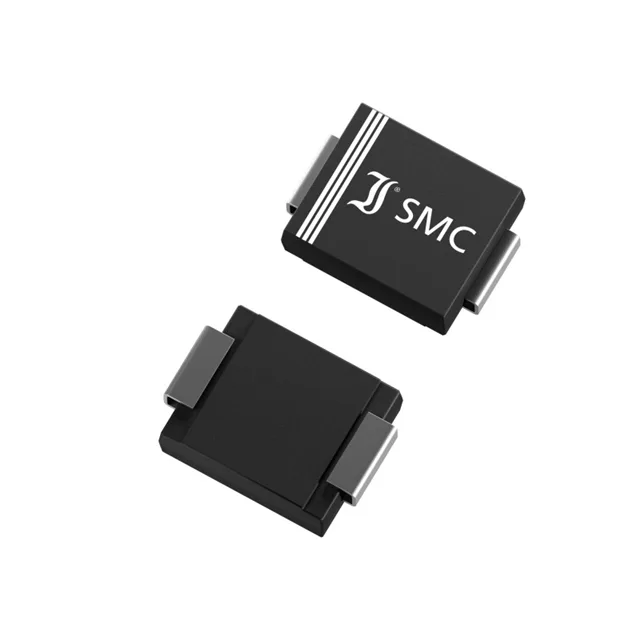
The DO-214AB (SMC) is the standard footprint for 1500W TVS diodes on board — the two-terminal anode-cathode pads land directly on the PCB surface, and the metal tab on the bottom provides the thermal path to the board copper. Junction temperature is rated from -50°C to 150°C. The lower bound matters for cold-start and outdoor equipment that powers up in sub-zero ambient; the upper bound reflects transient clamping duty rather than continuous dissipation — a TVS diode spends most of its life off.