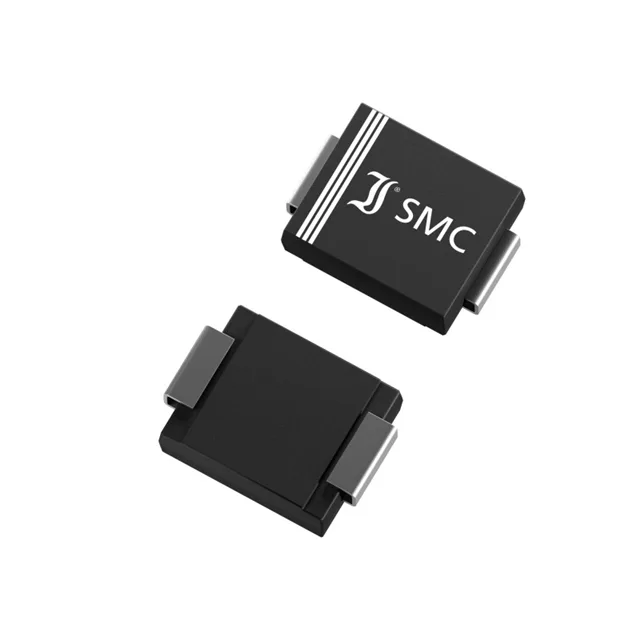
The 1.5SMCJ170C clamps transients at 304 V maximum when the peak pulse current reaches 4.9 A — the downstream circuit sees 304 V, not the incoming surge. The 170 V standoff rating is the working voltage the TVS tolerates without conduction during normal operation; it sits idle on the rail until a transient exceeds the 189 V minimum breakdown threshold. Bidirectional (the C suffix) means it handles both positive and negative spikes on the same two terminals — useful on AC rails or differential pairs where a unidirectional part would clip one polarity. Peak pulse power is 1500 W at the standard 1.5/50 µs waveform — the 1.5 µs rise and 50 µs decay define the surge shape in IEC 61000-4-5 testing. The part absorbs the surge energy and returns to its high-impedance state once the event passes, provided junction temperature stays within the 150 °C ceiling.
SMC package, 150 °C junction — thermal pad and board-level fit
The SMC/DO-214AB is the standard large-footprint TVS package in this power class — the cathode bar is the thermal dissipation path. A generous landing pad and thermal via array under the cathode tab keep Tj below 150 °C during repetitive surge events. The -50°C lower operating limit covers outdoor and cold-start environments; the 150°C upper ceiling gives headroom for board-level thermal stacking in enclosed equipment.
Active production — no cross-reference on record
Diotec Semiconductor lists 1.5SMCJ170C as Active. The sibling in this series without the C suffix is unidirectional — it clips only one polarity, which is the right choice for DC supply rails where negative transients are not a concern.