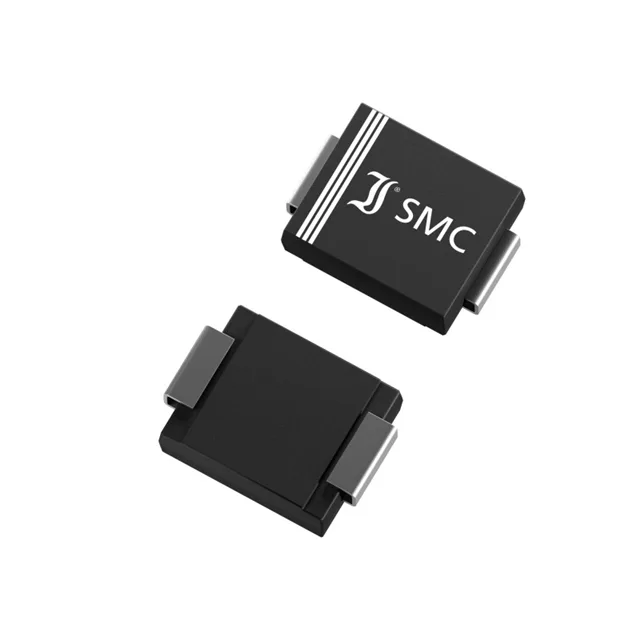
Unidirectional TVS diode — what the clamp rating means
The 1.5SMCJ16A is a unidirectional TVS diode specified to clamp a 10/1000 µs transients at 26 V maximum, which is the ceiling the protected rail sees when the event fires. The reverse standoff is 16 V typ, meaning the TVS sits idle below that voltage and only conducts when a surge pushes it above the 17.8 V minimum breakdown. At 57.7 A peak pulse current the clamping element survives the event without going short, so downstream circuits stay isolated. With a single unidirectional channel the part handles one polarity only — it does not float-bias or protect a bidirectional AC rail.
The DO-214AB (SMC) package is the standard J-bend footprint — it reflow-solders directly to the board and the cathodic band marks the polarity stripe. The strip packaging variant means it ships in cut tape or loose form factor rather than on a reel; for production pick-and-place confirm the reel option is also available if your line requires it. Junction temperature is rated to 150 °C, which gives headroom above the 85 °C typical board ambient for consumer or light industrial enclosures — the part survives the thermal swing without derating below the rated peak pulse.
What the ratings do not cover
The 1.5SMCJ16A is listed as not rated for power-line protection, which means the 16 V standoff is a signal-level or low-power rail rating, not a 220/240 V mains-clamp application. Matching the correct TVS to the right voltage domain — signal line vs. mains bus — is where this spec matters most for BOM fit.
Active sourcing posture
Diotec Semiconductor lists this part as Active in production.