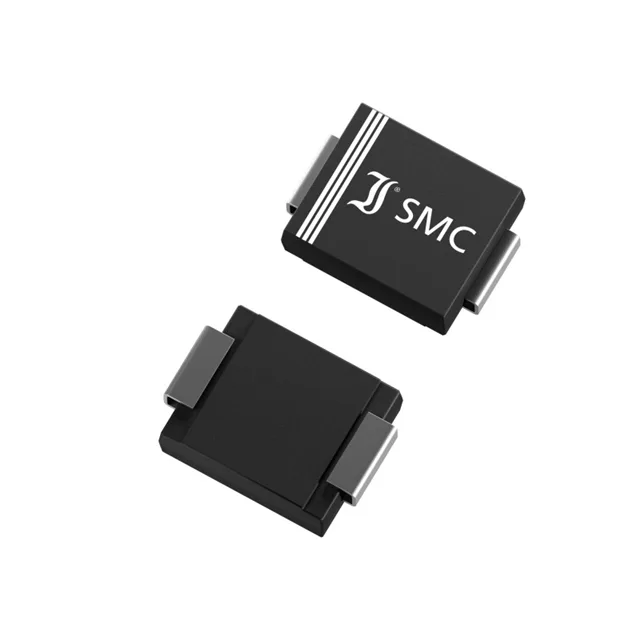
What the 1.5SMCJ120 protects and how the ratings fit
The 120V reverse standoff voltage is the working DC rail the protected circuit sees in normal operation. When a transient exceeds the 133V minimum breakdown threshold, the device clamps the peak at 214V (max) at the rated 7A peak pulse current — that 1.78× ratio of clamping to standoff defines the protection headroom the downstream load experiences. The 150°C maximum junction temperature gives thermal headroom during extended clamping events, but the DO-214AB thermal tab must still be soldered to the recommended land pattern — the junction-to-ambient thermal resistance is governed by the board copper area, not the package alone.
Standoff and breakdown — the two numbers that decide fit
The 120V typ reverse standoff is the DC working voltage you size the protection around. Select a standoff that exceeds the maximum sustained operating voltage of the rail you are guarding — the TVS sits idle above that level and activates only on transients that punch through the standoff threshold. The 133V minimum breakdown means the device does not turn on below that voltage under the specified test conditions. The datasheet curve shows breakdown behavior between 133V and the clamping ceiling of 214V — for circuits that need a tighter turn-on threshold, a lower-standoff TVS from the same series would be the right move.
For board-level designs the DO-214AB SMC footprint is industry-standard — any manufacturer marking the same JEDEC DO-214AB package at the same standoff and clamping ratings is a candidate second-source.