Clamping voltage and the downstream circuit
The 1.5SMCJ12: With 1500 W peak pulse power rating, the diode absorbs the transient energy without failing, keeping the rail within the downstream IC's absolute-maximum rating.
Standoff and breakdown — the protection window
The 12 V typical reverse standoff voltage is where the TVS sits quietly in normal operation, drawing only leakage current and leaving the protected rail unobstructed. The 13.3 V minimum breakdown threshold keeps the diode inactive through normal 12 V rail tolerances — it only transitions into conduction when a transient exceeds the standoff. This window between 12 V and 13.3 V is deliberate: it maximises protection headroom while avoiding false triggering on supply ripple or motor transients that sit just below the breakdown floor.
Junction temperature range
The Tj rating is the operative limit — the 150 °C ceiling constrains the continuous dissipation you can run at without derating, and the clamping voltage temperature coefficient shifts the breakdown point upward as the junction heats, so a hot board clamps at a slightly higher voltage than the 25 °C datasheet figure.
Package and board fit
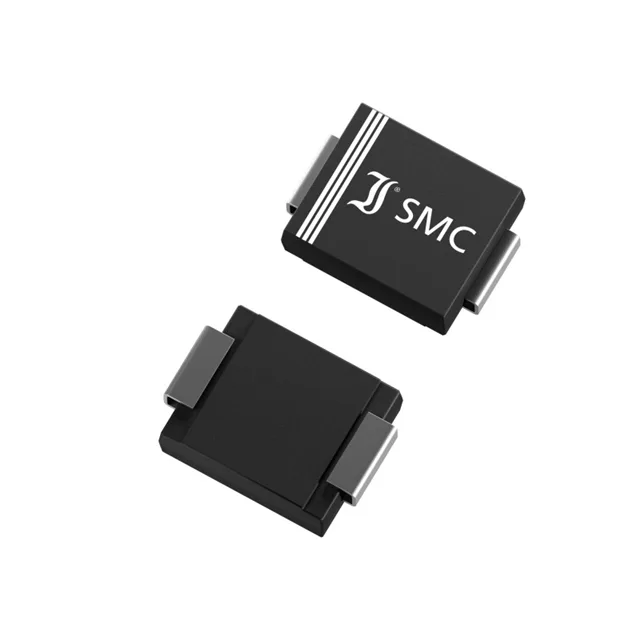
The DO-214AB (SMC) package is the standard surface-mount footprint for 1500 W bidirectional and unidirectional TVS diodes across multiple brands — the land pattern is compatible across Diotec, Littelfuse, Bourns, and EPCOS families. The strip packaging option is typical for prototype quantities or loose-reel kitting; confirm the reeled option if you are populating by automated pick-and-place. No directional polarity marking beyond the cathode bar on the package face — the unidirectional polarity is fixed and must match the board schematic or the protected rail sees reverse-bias during normal operation.